山西 / SX_C2
山西——大字——茶世界
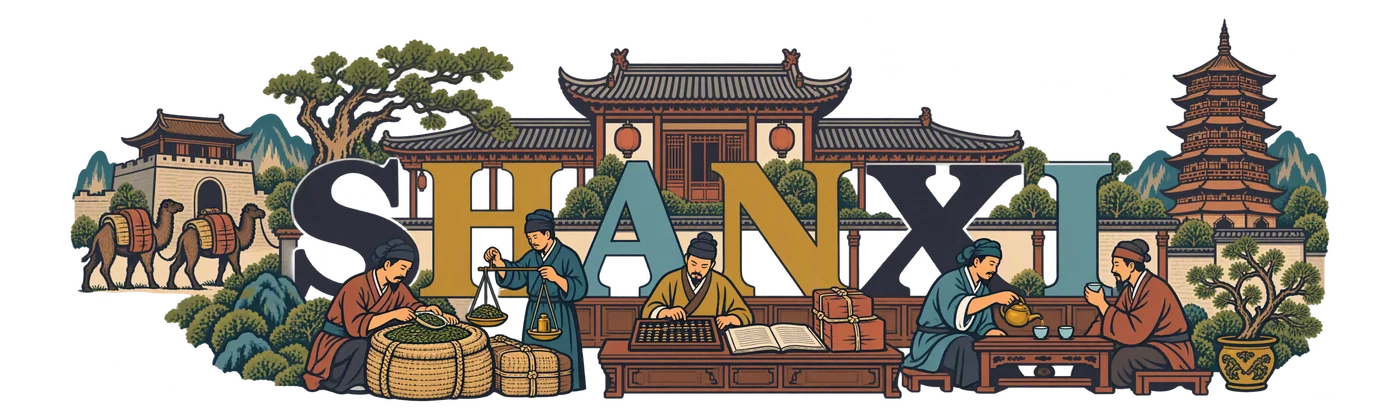
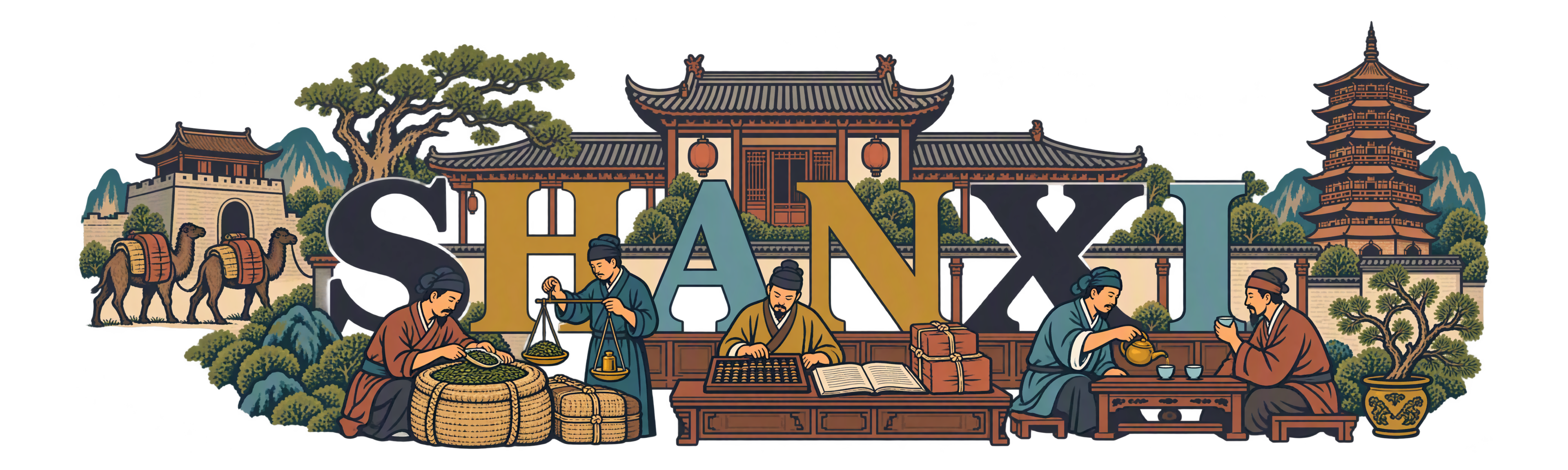
山西化身为商贸之城,字母旁有茶事活动。
已审核可发布 · 已查看图画并对当前文件进行技术检查
250 × 75 毫米 · 3840 × 1152 像素 · RGBA · 390.144 / 390.144 ppi
审核依据
SHANXI 拼写正确,并构成了一幅连贯的商镇构图。进口茶篮、称重、算盘账本和奉茶都清晰分明,与院落、商队和木塔融合得很好;没有虚假的本地茶树种植园。
PNG RGBA 3840 × 1152 像素;真实 alpha 通道;按比例导出 250 × 75 毫米。
经审阅后允许用于开放画廊;并不意味着用户认可工业化批量生产。
创作方案配色
#3A3C49
#B28A39
#797356
#A85A4C
#739C9F
原始生成提示词
文本与公开 TXT 一致。铭文与细节清单描述的是作者任务;并非 OCR,也不承诺在缺少所用参考的情况下可复现。
SHA-256: 2d99fdfbebc64e9f9faec872493dc45b9d89a79f98eed3aff1fb14a83fc6b0cc
阅读完整提示
Create one spectacular SHANXI collector print built around six monumental letters and three clear tea-trading actions. Flat ceramic-wrap artwork, not a mug or mockup. Use the supplied reference for sharp penwork and flat colour; replace its title and geography completely.

OUTPUT: 3840 x 1280 pixels, PNG with genuine RGBA transparency. All visible marks remain inside x=120..3720 and y=120..1160; final centered crop 3840 x 1152, 250 x 75 mm. Unpainted gaps and interiors must have alpha zero. No background rectangle, parchment, halo, vignette, gradient or opaque landscape backing.

PALETTE: five inks with clear roles. #3A3C49 charcoal for every main contour and the first letter; #B28A39 ochre for selected letter faces and tea vessels; #797356 olive for two restrained trees; #A85A4C rust for roofs, parcels and one garment; #739C9F muted blue for another letter and the small cups. Use flat colours. No watercolour, translucent painting, black wash or white underprinting.

TYPOGRAPHIC CORE: write exactly SHANXI, six separate tall, broad, upright serif capitals, aligned on one shared baseline. Let the word span most of the width. Preserve every stem, crossbar and counter. Never hide a letter behind a roof or person. Use solid letter faces. Do not substitute SHAANXI, GUANGDONG or another region.

Make one connected merchant courtyard interact with the lower part of this word. A shallow counter runs from S through A, turns into a ledger desk beneath N, and ends as a low tea table beside X and I. One continuous low roof edge behind the figures ties the objects together below the letter tops. The tea story remains the foreground hero; no patchwork of unrelated miniatures.

ACTION ONE, beneath S and H: a merchant opens one large woven bale of imported loose tea. A second person weighs a small scoop over a simple hanging balance. Show the open bale rim, visible leaf heap, scoop, one balance beam and two pans clearly. Use only a few large leaf marks; no granular texture.

ACTION TWO, beneath A and N: a seated clerk slides beads on an abacus beside one open ledger and two tied parcels. The ledger has parallel ruling ONLY, no tiny imitation writing. Represent carved timber with a handful of clean lines rather than a mass of scratches.

ACTION THREE, beneath X and I: two merchants share tea at a low table, one pouring from a small pot into two cups. A single potted branch supplies the olive accent. Behind the first letter, one very small gate and two clearly two-humped pack camels suggest the northbound trade connection. Behind the last letter, include one slender Yingxian-style wooden pagoda. Keep both landmarks subordinate and fully visible.

FACTS: Shanxi's central subject is Jin merchant trade in imported tea, courtyards, accounts and hospitality. Do not invent local Camellia plantations or factory processing. Omit herbal infusion and harvesting.

FINISH: sharp 5–7 px contours, clean flat colour boundaries, a few 3 px internal marks and short selective hatches. No blurred faces, muddy foliage, photo texture, airbrush or grunge. Visible text is SHANXI only. No small place labels, Chinese, logos, fake script or signatures. Readable at mug scale.