青海 / QH_C4
青海 — 手绘地图集
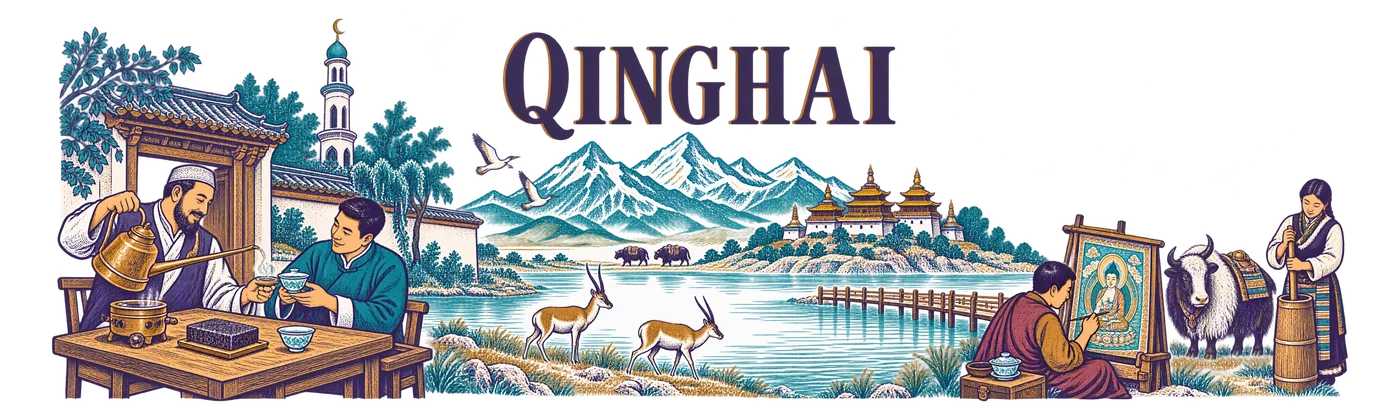
湖山地图,配家常茶、塔尔寺、羚羊和画家。
已审核可发布 · 已查看图画并对当前文件进行技术检查
250 × 75 毫米 · 3840 × 1152 像素 · RGBA · 390.144 / 390.144 ppi
审核依据
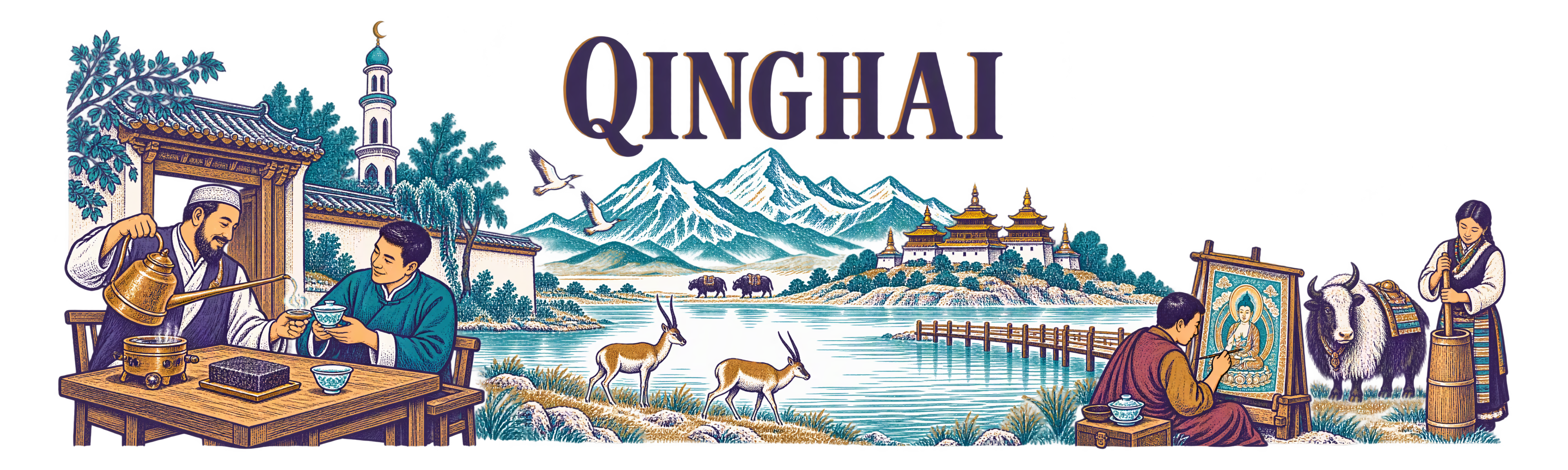
锐利的区域地图插画:河湟茶事、砖茶、开阔湖泊、塔尔寺风格寺院、热贡画师与酥油茶桶。标题与人物清晰,无模糊色块。
PNG RGBA 3840 × 1152 像素;真实 alpha 通道;按比例导出 250 × 75 毫米。
经审阅后允许用于开放画廊;并不意味着用户认可工业化批量生产。
创作方案配色
#4C467C
#3F9AA1
#AC8743
原始生成提示词
文本与公开 TXT 一致。铭文与细节清单描述的是作者任务;并非 OCR,也不承诺在缺少所用参考的情况下可复现。
SHA-256: f5133028de1f13c73630779671dd5244dbe6307fb53b8f21e10244e91914f343
阅读完整提示
Draw an exceptional original illustrated regional atlas for QINGHAI as a long collectible ceramic wrap. The style is a precise hand-drawn three-ink travel engraving: articulate contours, fine selective hatching, observed architecture and memorable large tea scenes. Use the supplied reference only for drawing quality, never its geography or lettering. Flat art only, no mug or mockup.

Native canvas 3840 x 1280 pixels, true transparent RGBA PNG, intended final wrap 3840 x 1152 pixels and 250 x 75 mm. All visible marks fit completely inside x=100..3740 and y=130..1150. Keep genuine zero alpha between and inside objects. No paper, white backing, mist, washed landscape fill, smoky halo, photographic grain or blurred pigment. Three colours only: deep violet #4C467C, lake teal #3F9AA1 and warm ochre #AC8743. Main contours are sharply resolved 3–5 pixel pen lines; short internal hatches describe wood and stone without filling entire hillsides with noise. Faces, fingers, roofs and vessel rims are crisp. No dense miniature city carpet.

ONE coherent horizontal atlas with TWO strong unequal anchors and an elegant open geographic connection. Place QINGHAI once, perfectly spelled, in large tall upright engraved serif capitals above the centre. No small place labels, Chinese characters, seals, numbers or extra text.

The left anchor is a generous foreground tea table at a Hehuang courtyard doorway: a host with a long-spouted copper kettle pours into a decorated gaiwan held by a guest. One additional bowl, a plain compressed tea brick and a small boiling pot make the tea story unmistakable. Show clean simple robes, clear faces and hands, and a fully visible table. A modest tiled gate and a slim mosque minaret rise behind the courtyard; do not add a skyline of tiny buildings.

The smaller right anchor is a Repkong thangka painter sitting beside a standing framed painting and a lidded tea bowl. Render the painting as a respectful simple symmetrical figure with a halo, no invented writing. Nearby, one yak and a person using a wooden butter-tea churn form a distinct domestic scene. Keep the animals and people whole, with breathing room around silhouettes.

Between the anchors, draw Qinghai's plateau through carefully selected open contours: three snow peaks, a broad lake edge with two birds, a short low salt-lake boardwalk, and two Tibetan antelopes on a small grassy bank. Lake water is made from separated sharp teal lines and transparent gaps, never an opaque blue wash. Snow and clouds are unfilled openings, not white paint. A compact Kumbum-inspired group of three golden-roofed Tibetan halls sits on a low hill, its roof tiers clear and countable; do not substitute a gigantic Potala Palace. A distant pair of loaded yaks can be shown below the mountain contour with two simple pack shapes.

Connect the composition through shoreline, tea-table gesture and mountain rhythm, while keeping generous irregular clear openings. The background remains transparent; no horizon-length shaded mountain wall, forest carpet or filled regional silhouette. Qinghai tea culture here is imported brick tea, gaiwan tea and butter tea hospitality, not high-altitude tea plantations. Large meaningful local details should reward close viewing. The final result must be sharp, balanced and finely drawn at small print scale, never painterly or blurred.