内蒙古 / NM_C5
内蒙古 — 景点巡游
不齐整的队列:器皿、主人、马匹与商队;友好的双线轮廓。
已审核可发布 · 已查看图画并对当前文件进行技术检查
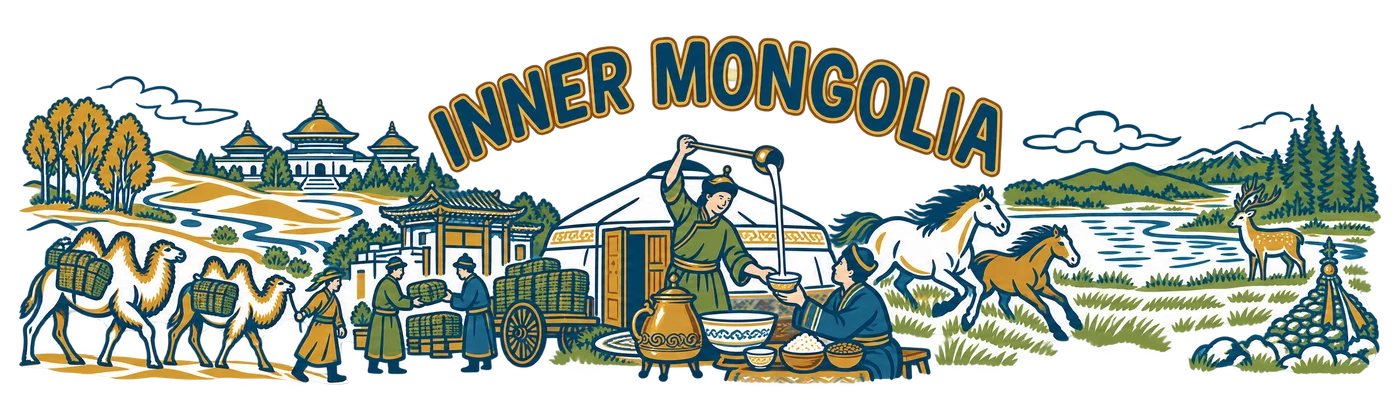
250 × 75 毫米 · 3840 × 1152 像素 · RGBA · 390.144 / 390.144 ppi
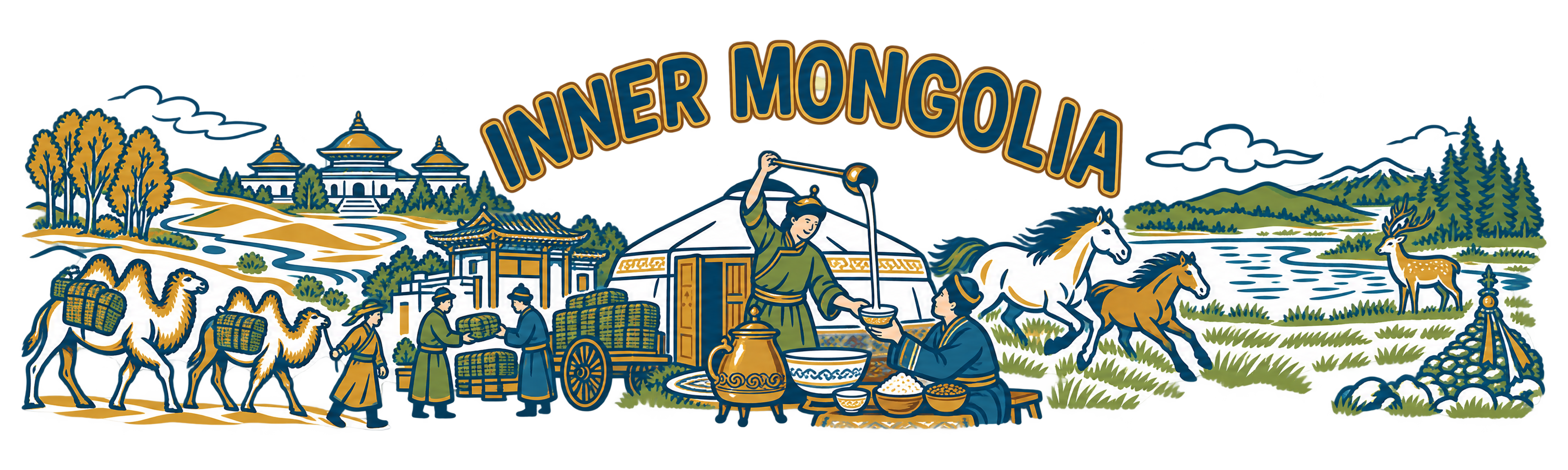
审核依据
已审阅明亮的轮廓构图,有双峰骆驼、茶叶贸易、蒙古包和奶茶奉客、东部自然和敖包。文字完整,形状和面部清晰,透明度保留,无裁剪。
PNG RGBA 3840 × 1152 像素;真实 alpha 通道;按比例导出 250 × 75 毫米。
经审阅后允许用于开放画廊;并不意味着用户认可工业化批量生产。
创作方案配色
#204D6D
#BE923B
#7B984A
原始生成提示词
文本与公开 TXT 一致。铭文与细节清单描述的是作者任务;并非 OCR,也不承诺在缺少所用参考的情况下可复现。
SHA-256: f335a8860b5177d7e00306711eaa1578b541b4925a9236307ef4ccc7599b5e42
阅读完整提示
Create one exceptional, completely flat regional ceramic-print artwork. This is the actual printable illustration, never a cup, product photograph, mockup, presentation board or simulated ceramic surface. The collection reference controls drawing language only: invent a new composition for the specified region and replace all Guangdong-specific objects. The source map supplies a regional inventory, not a paper texture or a layout to trace literally.

TECHNICAL CONTRACT: native canvas exactly 3840 x 1280 pixels, true RGBA PNG. Keep every visible mark, letter, ornament and antialiased edge inside x=60..3780 and y=110..1170. The final delivery will use a centered 3840 x 1152 export for a 250 x 75 mm wrap; leave the native safety area completely transparent. Compose for a long horizontal physical print, not a conventional poster. Nothing is cut off at either end. All exterior space and meaningful holes between objects must have alpha zero. No painted background, white underpainting, sky rectangle, tinted paper, land silhouette, colour fog, opaque backdrop or checkerboard. The wearer-visible ceramic supplies the unprinted space. Use the specified colours as ink, with normal edge antialiasing; do not invent extra white, black or metallic ink. Never print dimensions, crop marks, palette swatches, filenames, reference names or instructions.

ART DIRECTION: create a memorable hierarchy, a major focal scene and a quieter counterweight; alternate large close forms with medium stories and a few small discoveries. Let tea life interact with the region. Connect selected objects through a real roofline, tabletop, lane, ridge or river contour; retain clear breathing channels so each gesture and vessel is legible. Do not impose any percentage of empty space. Avoid both a cramped rectangular carpet and timid isolated stickers. Use confident, intentional linework that will survive the 75 mm print height. Limit texture to useful material clues. Any water, snow, steam or clouds are sparse outlines with transparent interiors, never washed fills. No photographic gradients, glow, heavy grunge, blurred edges or tiny illegible hatch fields.

FACTUAL DISCIPLINE: the scenes below distinguish cultivation, processing, trade, hospitality and non-tea infusions. Do not turn imported tea, berries, ginseng, barley, trees or grasslands into tea plantations. Do not invent a local tea cultivar, a named historic tea shop, medical effects, a precise trade route or archaeological evidence. Landmarks are cultural/geographic motifs, not assertions that tea was grown or traded at their gates. A contemporary tea pause next to a landmark is an authored scene, not a documentary historical claim. Keep people natural and respectful, with plausible hands and gestures; use no decorative pseudo-script.


C5: BOLD FRIENDLY LANDMARK PARADE. Confident rounded pen turns, double-contour regional lettering, reduced architectural silhouettes and a joyful procession of people, local travel motifs, vessels and landmarks. Three flat inks and spare patches of colour. Vary height and scale sharply; objects overlap through useful shared contours rather than being pasted in one equal-sized row. Tea must remain a visible living action in this mixed regional collection. Rounded does not mean infantile, and friendly does not mean generic.

REGION: Inner Mongolia. Exact ink palette: #204D6D, #BE923B, #7B984A. The first colour supplies the main line; the others have deliberate separate roles, not gradients.

AUTHENTIC SUBJECT MATTER:
Develop the map through a contrast of western desert and eastern grassland. Use two Bactrian camels and a guide against two spare dune contours, a small Ejin poplar group, a Yellow River bend, an Ordos mausoleum silhouette with three distinct roof masses, and a compact Hohhot temple gateway. Let one low yurt and a pair of running horses lead toward the open Hulunbuir grassland. Farther east a lake contour, a deer and a Greater Khingan conifer suggest a cooler wooded horizon. One small ovoo cairn is a respectful cultural detail, not a magical tea altar. Keep rivers, sand, clouds and animal bodies unpainted except for selected ink accents. Avoid a province outline or a compressed row of equally large monuments; select and combine secondary motifs around the living tea groups.

Tea anchors that remain visible: Hulunbuir bowl hospitality, Xilingol ladle-lift, brick-tea breaking and milk addition, a Chifeng copper-pot serving with grain/curd, and Hohhot tea-bale trade.

SPECIFIC COMPOSITION:
Begin with a generous long-spouted milk jug and open serving bowl, followed by a host at a yurt doorway, a high lifted ladle and a short copper pot. The bold double-contour INNER MONGOLIA heading bends gently through the upper center. Two unequal horses then carry the procession toward a lake and deer; at the other end two Bactrian camels pass a small Hohhot gate with plain tea bundles. A compact Ejin poplar and Ordos roof trio are supporting landmarks at different heights. Keep the animals natural, not mascots, and the milky liquid a tiny accent inside the outlined bowl rather than an opaque white fill.

VISIBLE TYPE: exact main title "INNER MONGOLIA" once. The regional title is the only printed text. Do not add small location labels. No Chinese characters, bilingual captions, pseudo-calligraphy, gibberish, slogans, logos or signatures. Prioritize visual storytelling over words. Do not allow letters to merge with foliage or buildings. The design must feel like a collectible regional artwork that a tea professional would want to handle and study.