吉林 / JL_C6
吉林——旅行线路
从倾泻的茶汤沿对角线向上至火山口与森林。
已审核可发布 · 已查看图画并对当前文件进行技术检查
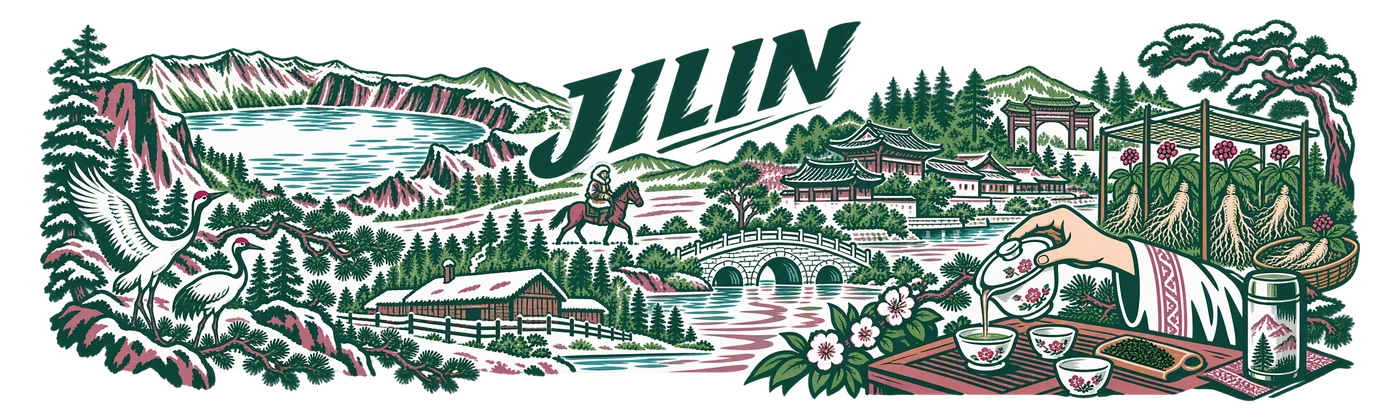
250 × 75 毫米 · 3840 × 1152 像素 · RGBA · 390.144 / 390.144 ppi
审核依据
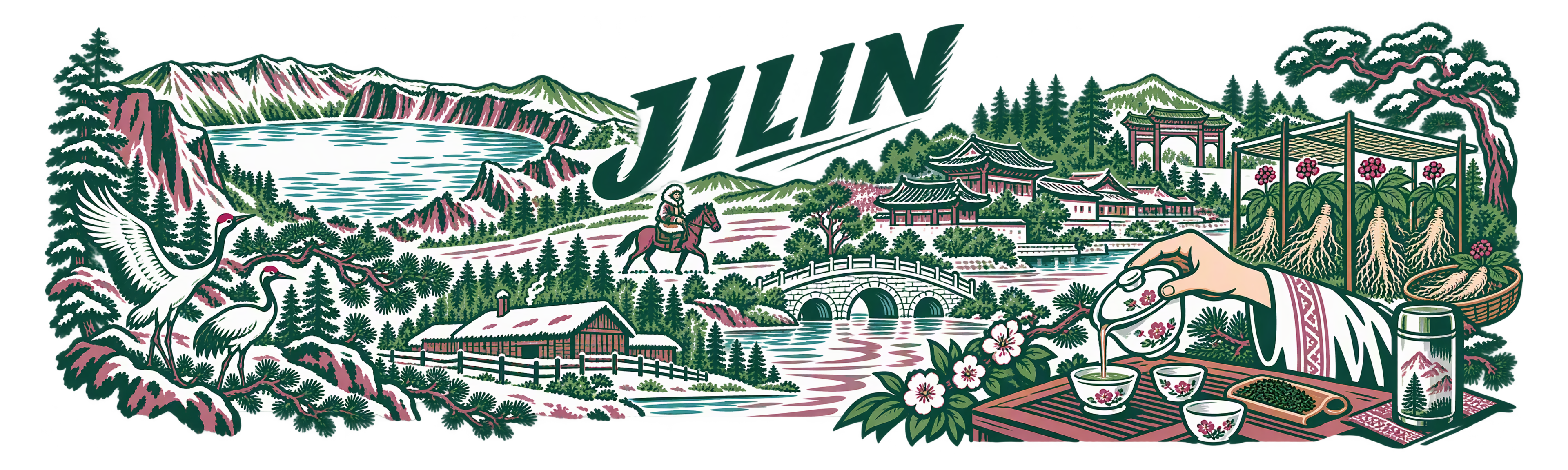
大幅倾斜的 JILIN 完整可读;图形线条锐利。无岛的开阔火山口湖、斟茶、保温瓶、城市河流、鹤以及单独展示的人参构成连贯构图,没有被茶园替代。
PNG RGBA 3840 × 1152 像素;真实 alpha 通道;按比例导出 250 × 75 毫米。
经审阅后允许用于开放画廊;并不意味着用户认可工业化批量生产。
创作方案配色
#254D43
#A44366
#849E6F
原始生成提示词
文本与公开 TXT 一致。铭文与细节清单描述的是作者任务;并非 OCR,也不承诺在缺少所用参考的情况下可复现。
SHA-256: 4f9cd83bd49dc3292e9af43b873ca40d486cd24c8895c261f5e891b5f873c603
阅读完整提示
Create one exceptional, completely flat regional ceramic-print artwork. This is the actual printable illustration, never a cup, product photograph, mockup, presentation board or simulated ceramic surface. The collection reference controls drawing language only: invent a new composition for the specified region and replace all Guangdong-specific objects. The source map supplies a regional inventory, not a paper texture or a layout to trace literally.

TECHNICAL CONTRACT: native canvas exactly 3840 x 1280 pixels, true RGBA PNG. Keep every visible mark, letter, ornament and antialiased edge inside x=60..3780 and y=110..1170. The final delivery will use a centered 3840 x 1152 export for a 250 x 75 mm wrap; leave the native safety area completely transparent. Compose for a long horizontal physical print, not a conventional poster. Nothing is cut off at either end. All exterior space and meaningful holes between objects must have alpha zero. No painted background, white underpainting, sky rectangle, tinted paper, land silhouette, colour fog, opaque backdrop or checkerboard. The wearer-visible ceramic supplies the unprinted space. Use the specified colours as ink, with normal edge antialiasing; do not invent extra white, black or metallic ink. Never print dimensions, crop marks, palette swatches, filenames, reference names or instructions.

ART DIRECTION: create a memorable hierarchy, a major focal scene and a quieter counterweight; alternate large close forms with medium stories and a few small discoveries. Let tea life interact with the region. Connect selected objects through a real roofline, tabletop, lane, ridge or river contour; retain clear breathing channels so each gesture and vessel is legible. Do not impose any percentage of empty space. Avoid both a cramped rectangular carpet and timid isolated stickers. Use confident, intentional linework that will survive the 75 mm print height. Limit texture to useful material clues. Any water, snow, steam or clouds are sparse outlines with transparent interiors, never washed fills. No photographic gradients, glow, heavy grunge, blurred edges or tiny illegible hatch fields.

FACTUAL DISCIPLINE: the scenes below distinguish cultivation, processing, trade, hospitality and non-tea infusions. Do not turn imported tea, berries, ginseng, barley, trees or grasslands into tea plantations. Do not invent a local tea cultivar, a named historic tea shop, medical effects, a precise trade route or archaeological evidence. Landmarks are cultural/geographic motifs, not assertions that tea was grown or traded at their gates. A contemporary tea pause next to a landmark is an authored scene, not a documentary historical claim. Keep people natural and respectful, with plausible hands and gestures; use no decorative pseudo-script.


C6: JOURNEY IN MOTION. The Guangdong journey-lines language becomes a region-specific sweeping diagonal or shallow S: energetic angular ink, a bold lightly slanted regional title, directional line accents and three flat inks. A close tea-making gesture or vessel anchors the foreground while local transport, architecture and landforms recede and return. The entire print should have a clear direction of movement, varied silhouette and a second discovery on the reverse side of the cup. No speed-line background, watercolor mist or row of stickers.

REGION: Jilin. Exact ink palette: #254D43, #A44366, #849E6F. The first colour supplies the main line; the others have deliberate separate roles, not gradients.

AUTHENTIC SUBJECT MATTER:
Use the crater bowl of Tianchi and the sharp Changbai rim as the main natural signature; draw water as open curved strokes. Contrast this with a low Songhua riverside street, a small stone bridge, a Korean-style courtyard roof group at Yanji, and a wooden rural farmhouse. Include one deer, two cranes, a few pines and a compact ginseng cultivation shade frame near Baishan. Ginseng roots are illustrated as roots, never Camellia tea bushes. A single horse and rider may mark the plains at one end. Tonghua can be suggested by a small traditional gateway. The cultural architecture, forest ecology and real tea-service actions make a rich northern story without inventing tea agriculture.

Tea anchors that remain visible: modern tea-art pouring from a gaiwan, imported leaf weighing and tasting, a traveller with tea thermos, and a separately understood ginseng herbal still life.

SPECIFIC COMPOSITION:
Begin with the near-view sweep of a gaiwan lid and pouring hand at the lower right. Pull the eye upstream through the Songhua curve into an arched bridge, rising pine trunks and the tilted crater rim of Tianchi at upper left. A small rider moves along the plain below the slanted title. The street-side tea counter and forest thermos shelter occupy opposite bends. The ginseng frame is a small squared interruption in the natural rhythm, roots explicit and no tea bushes. Use directional ink economically; the crane wings echo the river curve, without an atmospheric painted backdrop.

VISIBLE TYPE: exact main title "JILIN" once. The regional title is the only printed text. Do not add small location labels. No Chinese characters, bilingual captions, pseudo-calligraphy, gibberish, slogans, logos or signatures. Prioritize visual storytelling over words. Do not allow letters to merge with foliage or buildings. The design must feel like a collectible regional artwork that a tea professional would want to handle and study.