甘肃 / GS_C7
甘肃——真实杯盏
十个大小不一的主要场景,以简洁轮廓呈现:六个茶语境与四组地图。
已审核可发布 · 已查看图画并对当前文件进行技术检查
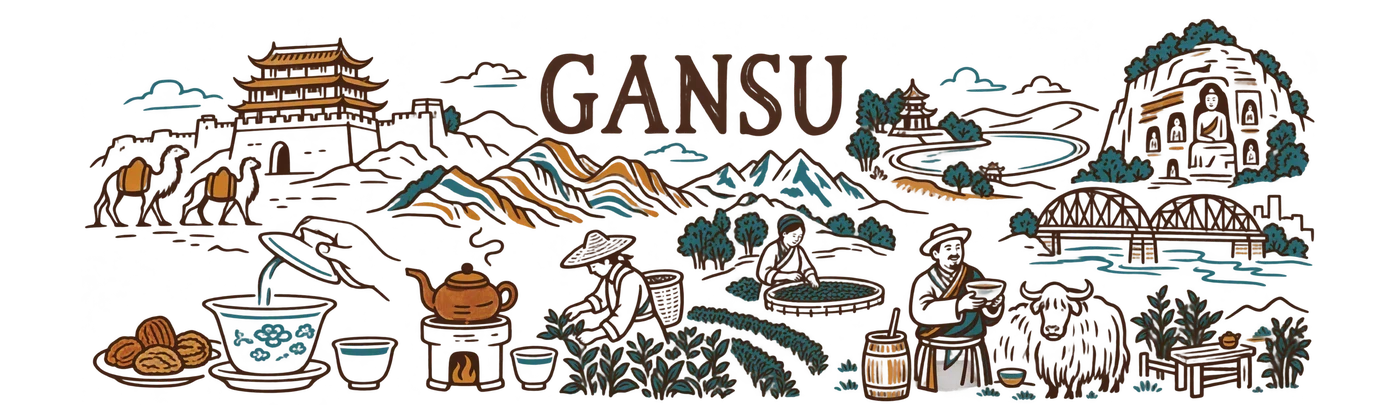
250 × 75 毫米 · 3840 × 1152 像素 · RGBA · 390.144 / 390.144 ppi
事实依据与题材选择
十个大小不一的主要场景,以简洁轮廓呈现:六个茶语境与四组地图。
图名与图语
任务仅规定一个词——GANSU,以大型拉丁衬线字母呈现。小地名、中文文本、数字和第三方标志均被排除。此为任务描述;实际可读性另行评估。
绘制方法与风格参考
研究了广州、澳门、香港和珠海城市主题的真实旅行杯照片。从中提取了观察到的图案特征:中等生动的手绘轮廓、简单可识别的剪影、选择性平面色彩点缀和顶部带状大标题。具体查看的角度组合因地区而异。
当地场景在尺度、形态和高度上各不相同。它们的并置形成整体节奏;不设定连续全景、统一地平线、相同模块网格或固定留白比例。轮廓之间与内部保持通透。
陶瓷表面、高光、手和照片中的物体背景不属于新绘图。参考图像和个人原始照片不在此发布。每个地区的三种颜色是作者调色板,而非所拍摄茶杯的实测涂料标准。
审核依据
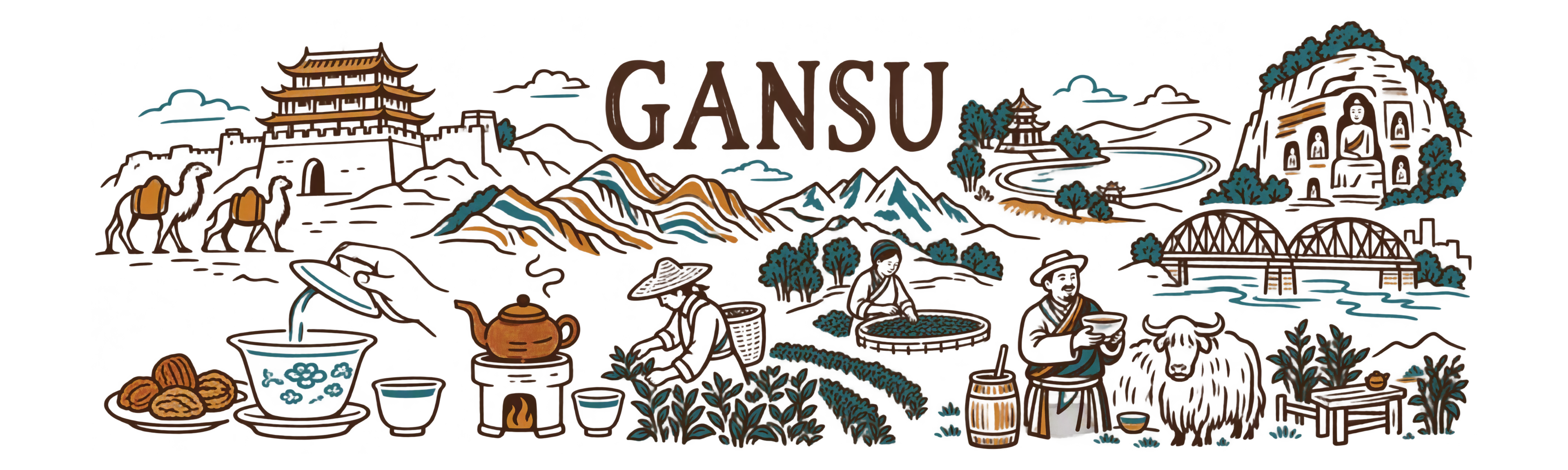
简洁的手绘轮廓与单一的 GANSU;堡垒、骆驼、茶杯、当地茶礼、园林与牦牛在尺度上有所区分。符合 C7 风格,背景透明。
PNG RGBA 3840 × 1152 像素;真实 alpha 通道;按比例导出 250 × 75 毫米。
经审阅后允许用于开放画廊;并不意味着用户认可工业化批量生产。
创作方案配色
#564238
#B97D2E
#428A99
原始生成提示词
文本与公开 TXT 一致。铭文与细节清单描述的是作者任务;并非 OCR,也不承诺在缺少所用参考的情况下可复现。
SHA-256: 166d34bed6f1e012505eefdc8b079354bcda19a32f779c76f0dcf5156fcbd38d
阅读完整提示
Create an original flat souvenir-cup decal, not a mug mockup or a photographed product. Follow the approved real-cup outline style with simple shapes and restrained accents. Do not reproduce the source map's parchment, dense relief shading or filled scenery. Native canvas 3840 x 1280 pixels, actual RGBA PNG, with every mark safely inside x60..3780/y110..1170; final centered export is 3840 x 1152 for 250 x 75 mm. Keep all canvas margins alpha zero. No visible frame or printed technical information.

Use confident, slightly human 5–7 px outlines, readable at 75 mm print height. Most object bodies are open alpha-zero interiors: the ceramic itself becomes the unprinted colour. Only small, sharply bounded flat accent patches; no white or cream backing, no sky/ground slab, no brown wash, watercolor, airbrush, photographic texture, dense engraving or crosshatching. Use 3–5 short interior marks for an ordinary vessel or object, a few essential openings for a building. Tea steam is at most one or two open curls. No global ground line connecting every scene.

Arrange 8–10 substantial, unequal episodes in a lively irregular field. Put the largest episode off-center, let a tall narrow object answer it, and fit a few smaller ones into purposeful gaps. Different heights and natural overlaps are welcome, but every episode needs a legible silhouette and a clean breathing channel. No fixed whitespace percentage, no equal two-row sticker grid, no miniatures scattered under an enormous empty heading. Preserve real regional identity through observed objects and explicit tea actions. Never invent tea farms or label herbs as tea leaves. Architecture is a geographic motif; contemporary tea pauses are authored scenes, not historical evidence.


C7: REAL SOUVENIR-CUP PEN DRAWING. Match the approved Xinjiang and Shanghai cup illustrations through warm, assured medium outlines and selective small flat accents. At native size use approximately 5–7 px main strokes and only 3–5 interior strokes per simple object. Larger buildings may have a few more essential windows, never dense hatching. Most enclosed bodies remain transparent. Draw 8–10 unequal, generous subject groups at different heights, with irregular open channels between them. This is neither an evenly spaced icon grid nor a tightly packed panoramic painting. No watercolor, sepia haze, opaque cream objects, stippled shading or engraving.

REGION: Gansu. Palette: #564238, #B97D2E, #428A99. First colour is the main outline; remaining two are small flat accents. No additional inks.

Draw TEN uneven episodes, each with a few large legible objects: (1) a generous Sanpaotai gaiwan, tilted lid and pouring hand at lower left, with three or four dry-fruit shapes on a small plate; (2) a compact clay tea pot on a little Tianshui stove, its cup to one side; (3) a Wenxian picker and three curved tea-bush rows, leaf basket open and unfilled; (4) a Yangba leaf-sorting tray beneath one wooded hill contour; (5) a Yuhe tea bench beside two tea shrubs, visibly smaller than Wenxian but still readable; (6) a Gannan host offering a butter-tea bowl beside a plain churn and one yak, not a tea garden; (7) a Jiayuguan gate answered by two simple Bactrian camels; (8) the crescent spring with a tiny pavilion and a narrow oasis tree, all water unfilled; (9) three striped Danxia ridges transitioning to two sharper Qilian peaks; (10) a low Lanzhou truss bridge and a simple Maijishan cliff niche as one compact travel group. Main gaiwan and picker are unequal visual anchors. Arrange the ten episodes at changing heights around the title, not as ten matching stamps; connect at most a few neighbours with a short land contour. Small ochre accents belong to fruit, gate roofs and ridge stripes; turquoise belongs to tiny bowl rims and a few river strokes. The dark brown line remains clean, never diluted into a wash. All scenes are present-day illustrative motifs; do not show desert tea cultivation or label a camel load as historical tea evidence.

PRINTED TEXT: exactly "GANSU" once, near the upper composition, in warm hand-drawn block-serif capitals. This is the only visible text: no place names, subheadings, numbers, Chinese, labels, logos or signatures. Keep the word readable and scaled to the drawing, not an oversized empty banner. Preserve the anatomy and silhouette of local animals and vessels; do not repeat or multiply episodes to fill gaps. Deliver the drawing itself on genuine transparency.