安徽 / AH_C7
安徽——安徽十物
简洁的收藏图形,配以大型茶具和徽州民居。
已审核可发布 · 已查看图画并对当前文件进行技术检查
事实依据与题材选择
简洁的收藏图形,配以大型茶具和徽州民居。
图名与图语
任务中仅规定一个词——ANHUI,使用大号衬线拉丁字母。小地名、中文文字、数字及第三方标志均被排除。此为任务描述;实际可读性另行评估。
原始构思的情节清单
以下逐字列出英文作者提示中计划的组别。这是对选题的透明解释,而非承诺生成器复现了每个细节。
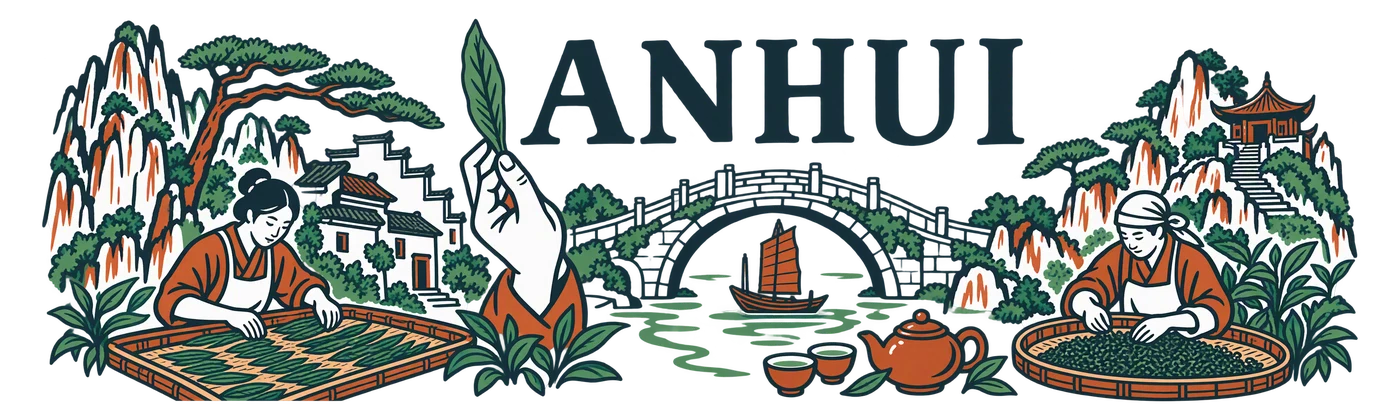
1。左侧是两座棱角分明的黄山花岗岩峰和一棵弯曲的横松。使用几笔果断的岩石线条、清晰的针叶轮廓和平涂点缀;岩石内部留白。
2。松树下方及部分旁侧,两座徽州民居,具有特色的阶梯式马头墙、黑瓦屋顶轮廓和一扇敞开的门。建筑必须完整绘制,不能在底部渐隐。
3。一座宽敞的古老石拱桥将视线引向中部;桥拱下,一艘小型内河帆船扬着陶土色风帆,配以三道利落的水纹。保留完整的桥梁轮廓。
4。一座朴素的九华山寺庙屋顶坐落在右侧远处的小石丘上。清晰的屋角、台阶和几丛鼠尾草;没有远景雾气。
5。前景左下角,一位匠人正仔细地将长而扁平的太平猴魁茶叶平行摆放在一个大型长方形竹盘上。手部、衣袖、叶形和盘沿清晰可见。
6。一只大手握着一片修长的六安瓜片茶叶,在标题左端形成干净的竖向对应。表现分离的叶片,不带芽头,不是花束。
7。桥右侧,一位坐着的祁门制茶师在宽大的圆形竹筛中分拣细小卷曲的黑茶叶。使人物与完整的竹篮成为强烈可读的场景。
8。标题下方偏右处,一个小茶壶和两个茶杯构成安静的茶具组合,旁边有一片简单勾勒的叶子。
绘制方法与风格参考
研究了广州、澳门、香港和珠海城市主题的真实旅行杯照片。从中提取了观察到的图案特征:中等生动的手绘轮廓、简单可识别的剪影、选择性平面色彩点缀和顶部带状大标题。具体查看的角度组合因地区而异。
当地场景在尺度、形态和高度上各不相同。它们的并置形成整体节奏;不设定连续全景、统一地平线、相同模块网格或固定留白比例。轮廓之间与内部保持通透。
陶瓷表面、高光、手和照片中的物体背景不属于新绘图。参考图像和个人原始照片不在此发布。每个地区的三种颜色是作者调色板,而非所拍摄茶杯的实测涂料标准。
审核依据
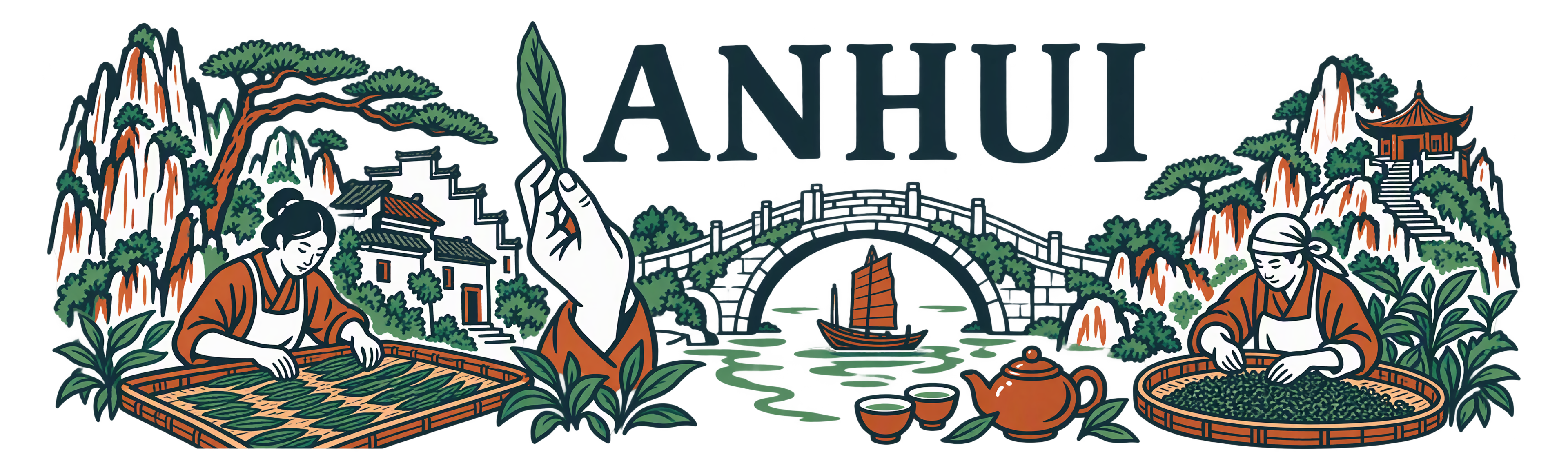
新构图干净:自信的中部轮廓,均匀的平涂填充,完整的 ANHUI。可辨认猴魁、单片叶、分拣、品茶与当地建筑;先前的模糊光晕已消除。
PNG RGBA 3840 × 1152 像素;真实 alpha 通道;按比例导出 250 × 75 毫米。
经审阅后允许用于开放画廊;并不意味着用户认可工业化批量生产。
创作方案配色
#263B45
#A65336
#8FA98C
原始生成提示词
文本与公开 TXT 一致。铭文与细节清单描述的是作者任务;并非 OCR,也不承诺在缺少所用参考的情况下可复现。
SHA-256: ff7669a122c948cc11c4e6ad82c1fc6a4e62a76e1b552456687df57fe8eaba09
阅读完整提示
Create a premium souvenir-cup transfer for ANHUI, China. Follow the reference's lively, confident tourist-cup pen drawing. Make a new composition with tea craft as important as architecture, printed in three flat inks.

Output one 3840 x 1280 PNG with real RGBA transparency. Keep all marks inside x60..3780 and y110..1170 for a 250 x 75 mm wrap. No product mockup, frame, paper or rectangular background. Empty spaces and unpainted interiors are transparent, never white. Use dark slate #263B45 outlines, burnt clay #A65336 and sage #8FA98C selective flat fills. No gradients or fourth colour.

The only lettering is ANHUI, written once in large, beautifully balanced upright serif capitals across the upper middle. Keep the complete word unobstructed and comfortably away from all edges. No other letters, place labels, Chinese, numbers, signatures or logos.

Draw exactly eight substantial, recognisable episodes, varied in scale and joined by visual rhythm rather than a grid:
1. At the left, two angular Huangshan granite pinnacles and one crooked horizontal pine. Use a few decisive rock lines, clearly outlined needles and flat accents; leave the rock interiors open.
2. Below and partly beside the pine, two Huizhou houses with characteristic stepped horse-head gables, black-tile roof contours and one open doorway. Architecture must be fully drawn, not dissolving at the bottom.
3. A generous old stone arch bridge carries the eye through the middle; under its arch, one small river junk with a clay-coloured sail and three crisp water curves. Preserve the whole bridge silhouette.
4. A modest Jiuhua mountain temple roof on a small rocky knoll balances the far right. Distinct roof corners, steps and a few sage shrubs; no distant haze.
5. In the lower left foreground, a craftsperson carefully lays long flat Taiping Houkui tea leaves in parallel on a large rectangular bamboo tray. Clear hands, sleeve, leaf shapes and tray rim.
6. A large hand holding one elongated Lu'an Guapian leaf creates a clean vertical counterpoint near the title's left end. Show separate leaf blades without a bud, not a flower bouquet.
7. Right of the bridge, a seated Qimen tea maker sorts small curled dark tea leaves in a broad round bamboo sieve. Make the figure and complete basket a strong readable scene.
8. Below the title toward the right, a small teapot and two drinking cups form a quiet tea-service group, with one simple outlined leaf beside them.

Give the bridge and Houkui tray more weight than the temple. Let selected roofs, branches and basket edges overlap naturally. Preserve transparent breathing spaces between episodes and inside architecture. No uniform rows, equal-sized icons or filler objects.

Use clean medium-width pen contours, steady edges, few interior strokes and restrained solid patches. All objects must remain sharp at print scale. No watery edges, charcoal, blurred ink, ghost marks, shadows, feathering, clouds, sky, smoke, mist, grain, engraving or crosshatching. Keep every word, limb, roof, tray and mountain fully inside the safe bounds.