安徽 / AH_C5
安徽 — 山墙、叶子和河帆
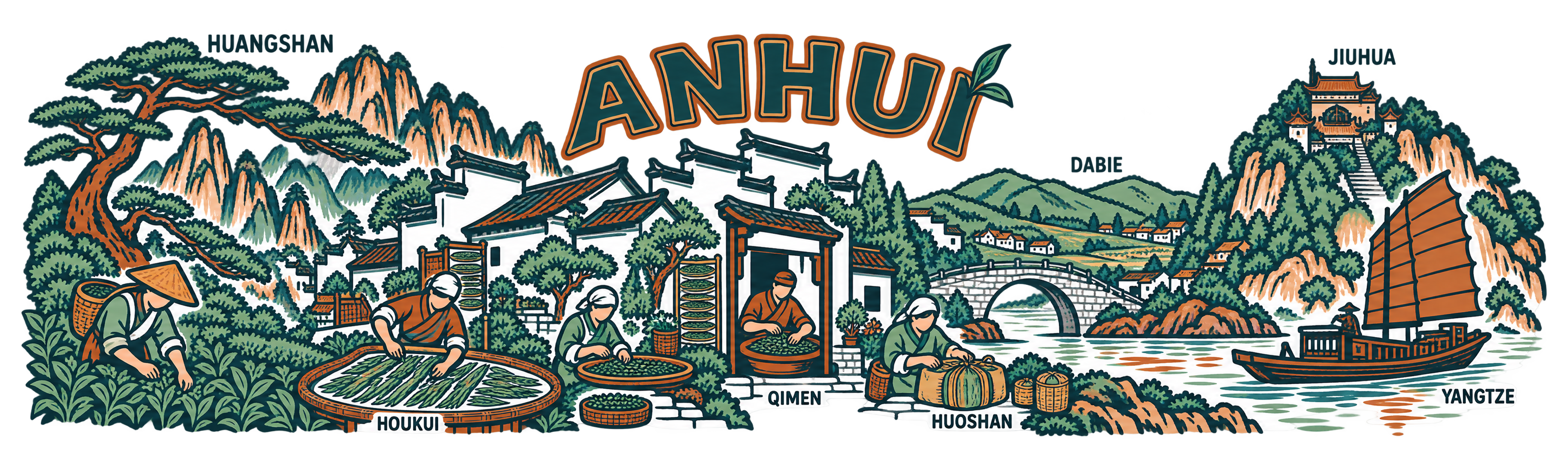
双轮廓名称被安徽的大型友好剪影环绕。
已审核可发布 · 已查看图画并对当前文件进行技术检查
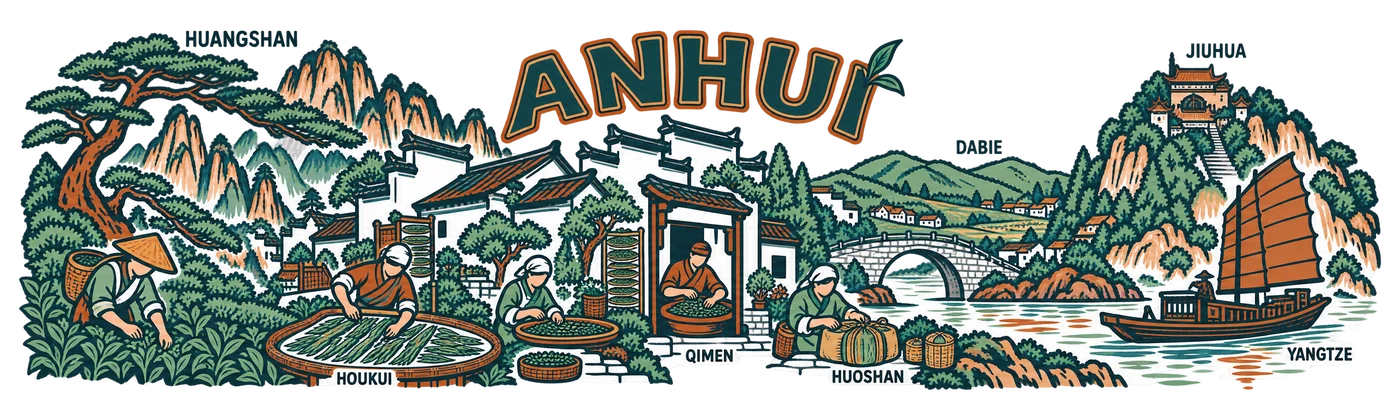
250 × 75 毫米 · 3840 × 1152 像素 · RGBA · 390.144 / 390.144 ppi
审核依据
干净友好的轮廓图形和完整的双标题 ANHUI。主要副标题可读,构图连贯,没有可见的裁剪或矩形背景。
PNG RGBA 3840 × 1152 像素;真实 alpha 通道;按比例导出 250 × 75 毫米。
经审阅后允许用于开放画廊;并不意味着用户认可工业化批量生产。
创作方案配色
#263B45
#A65336
#8FA98C
原始生成提示词
文本与公开 TXT 一致。铭文与细节清单描述的是作者任务;并非 OCR,也不承诺在缺少所用参考的情况下可复现。
SHA-256: 86c2cd434fcb5e0f424f2d5fdf257e15e81b515d66f0e910a3537159889c42f2
阅读完整提示
Create an original collectible regional ceramic PRINTING DECAL, not a mug or mockup. The supplied image is a drawing/style benchmark only: replace every reference-region subject and word with the researched region described below. Make a confident, rewarding composition whose tea craft, architecture and landscape belong together.
OUTPUT: PNG RGBA, native 3840 x 1280 px. Keep every mark inside x=60..3780 and y=110..1170; use nearly the whole long strip. The final export is 3840 x 1152 px for 250 x 75 mm. Do not shrink the entire design to a central 16:9 picture. Preserve normal object proportions and complete edge objects.
ALPHA: genuine transparent exterior and natural transparent openings inside the drawing. No white or cream rectangle, paper texture, sky wash, sea fill, provincial silhouette, checkerboard, aura, gradient or drop shadow. Unpainted architecture, water and negative openings reveal alpha. Colour belongs to actual drawn objects, never a vague backdrop. Do not reproduce any opaque field visible in the reference.
For C1–C6, create ONE connected varied panorama with two or three unequal anchors, overlapping near/middle/far scales and smaller discoveries. Connect through real terrain, streets, roofs, branches and human actions, not dotted diagram routes. No two-row sticker sheet, isolated equal scenes, caption boxes, repetitive generic gardens or an empty band under the title. Do not impose a percentage of blank space. C7 instead follows its explicit irregular album direction below.
English lettering only, exact spelling, dark clear capitals for allowed captions. One main regional title. No Chinese characters, logos, invented seals, pseudo-writing, promotional superlatives or health claims. A short legible caption is preferable to microscopic text. Respect the stated distinctions between growing tea, processing it, trading it and serving it. A full research inventory need not become a printed gazetteer.

COLLECTION: A BOLD REGIONAL PARADE. Follow GD02: confident friendly pen contours, spare flat three-colour accents and large double-contour regional lettering. Build a lively procession of unequal silhouettes, tea activity, architecture and vessels. Let actual terrain and roof rhythms connect the drawings. This should be immediate and memorable, with clear positive and negative shapes, not intricate engraving.
REGION: ANHUI.
PALETTE: #263B45, #A65336, #8FA98C. Preserve this regional colour family; first colour supplies the strongest contour/text. Extra dark/light rendering colours and full-colour watercolour are not wanted.
RESEARCHED CONTENT:
Use the map's distinctive regional vocabulary: granite Huangshan peaks with sculptural pines, white open Huizhou walls and dark horse-head gables, an old stone arch bridge, a high Jiuhua temple, broad Yangtze navigation with a single junk, Lake Chaohu and lower western Dabie hills. Tea provides the human foreground: a Lu'an firing basket, long Taiping Houkui leaves on a mesh press, delicate Maofeng sorting, Qimen black-tea rolling, and a Huoshan wrapped yellowing bundle. Add Xiuning and Jingxian work as smaller discoveries near appropriate southern roofs. The northern plains remain low and open, not a wall of plantations. A river vessel expresses trade and journey rather than proving a particular historic shipment. Leave water transparent, defined by banks and a few lines. White-walled architecture means unfilled alpha interiors with dark contours, not a large white printed rectangle.
AUTHORED COMPOSITION:
Stage a bold procession of unlike silhouettes: a bent Huangshan pine and two granite spires at far left, a low tea picker, three large stepped Huizhou gables at centre, a broad Houkui screen below them, and a high junk sail at right. A curved stone bridge joins the gable lane to the boat bank. Guapian firing and Huoshan cloth work sit on real ground at opposite scales; a Qimen tray rests in an open doorway. Double-outline ANHUI occupies the roof-and-pine opening and is touched by a single leaf tip. Friendly strong contours and selective three-ink roof/leaf accents replace dense texture; do not turn every building into a miniature pagoda.
LETTERING PLAN:
ANHUI once. Supporting text only HUANGSHAN, DABIE, QIMEN, HOUKUI, YANGTZE, JIUHUA; no other microtext.
REGIONAL SAFEGUARDS:
Keep Guapian bud-free and Houkui flat and long; Maofeng is a smaller tender shoot. Qimen black tea and Huoshan yellow tea are distinct processes. No monkeys picking Houkui, no health claims, no all-province plantation. Unnamed map bridges/pavilions stay generic local architecture. Huangshan and Dabie have different silhouettes. No claim that every village stands beside the same river.
FINAL STANDARD: sharply drawn object edges, deliberate line hierarchy, vivid meaningful local differences and a recognisable whole place. Protect the main title and key silhouettes; never solve complexity by making everything equally tiny.