Аньхой / AH_C1
Anhui — Лист, огонь и гранит
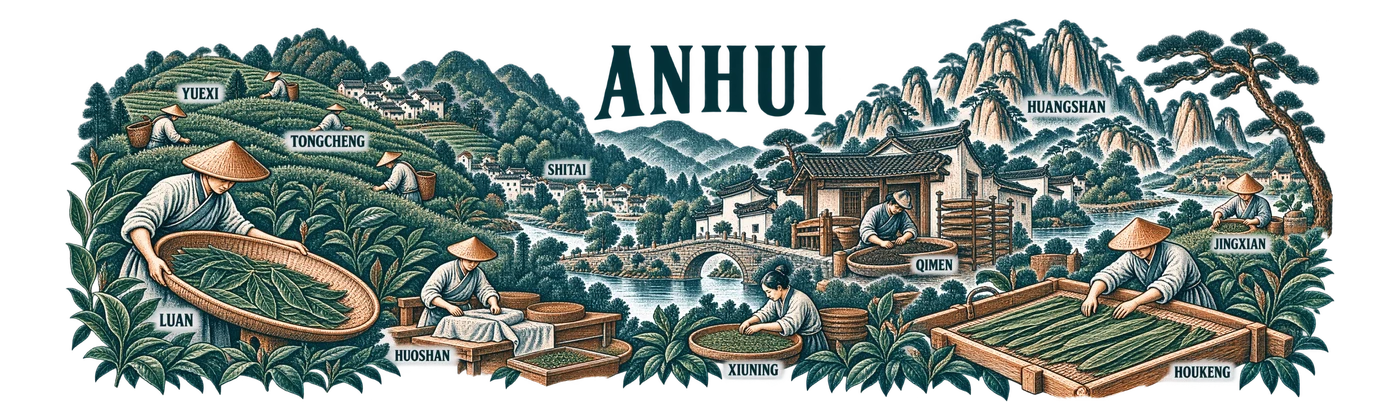
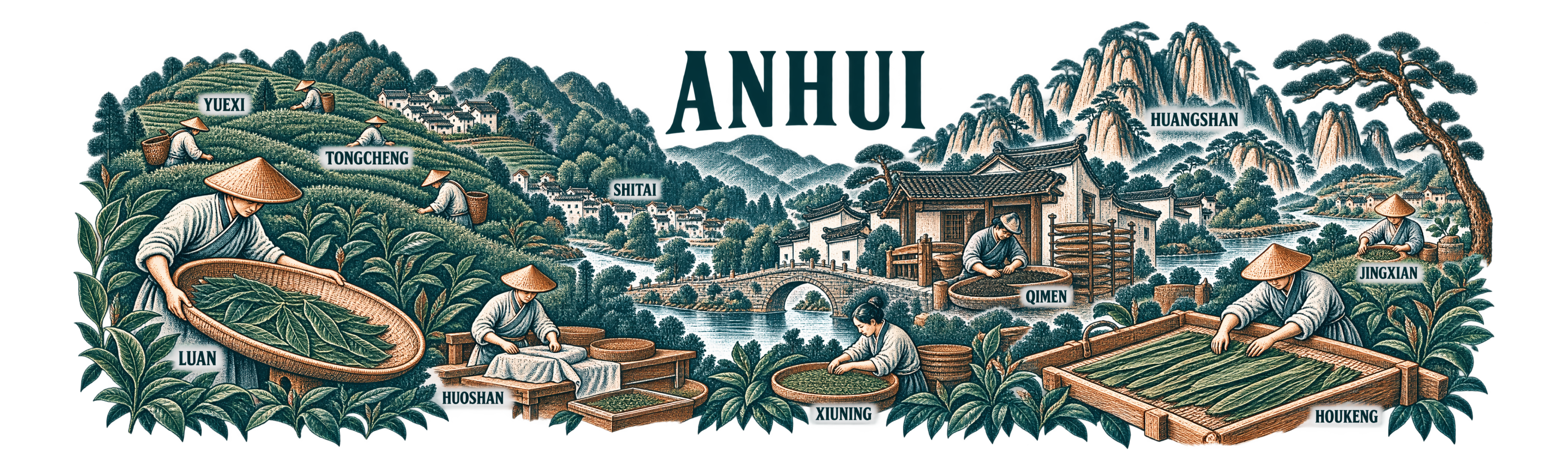
Длинный лист Houkui и большая обжарочная корзина задают масштаб всему чайному пейзажу.
Проверено для публикации · Просмотр рисунка и техническая проверка текущего файла
Региональное исследование и источники
Основание проверки
Цельная двухцветная чайная гравюра с полным ANHUI. Крупные листья и обработка чая различимы; все основные региональные подписи читаются, чистые границы, без видимых обрезок.
PNG RGBA 3840 × 1152 px; настоящий альфа-канал; пропорциональный экспорт 250 × 75 мм.
Допущен после просмотра для открытой галереи; не означает утверждение пользователем промышленного тиража.
Палитра авторского задания
#263B45
#A65336
Точное текстовое задание
Текст совпадает с публичным TXT. Перечень надписей и деталей описывает авторское задание; это не OCR и не обещание воспроизводимости без использованных референсов.
SHA-256: 34d30cf49eff58b834e98d115d63212378e4ff22cb7c17d08cd0b06fe551db87
Прочитать полный промпт
Create an original collectible regional ceramic PRINTING DECAL, not a mug or mockup. The supplied image is a drawing/style benchmark only: replace every reference-region subject and word with the researched region described below. Make a confident, rewarding composition whose tea craft, architecture and landscape belong together.
OUTPUT: PNG RGBA, native 3840 x 1280 px. Keep every mark inside x=60..3780 and y=110..1170; use nearly the whole long strip. The final export is 3840 x 1152 px for 250 x 75 mm. Do not shrink the entire design to a central 16:9 picture. Preserve normal object proportions and complete edge objects.
ALPHA: genuine transparent exterior and natural transparent openings inside the drawing. No white or cream rectangle, paper texture, sky wash, sea fill, provincial silhouette, checkerboard, aura, gradient or drop shadow. Unpainted architecture, water and negative openings reveal alpha. Colour belongs to actual drawn objects, never a vague backdrop. Do not reproduce any opaque field visible in the reference.
For C1–C6, create ONE connected varied panorama with two or three unequal anchors, overlapping near/middle/far scales and smaller discoveries. Connect through real terrain, streets, roofs, branches and human actions, not dotted diagram routes. No two-row sticker sheet, isolated equal scenes, caption boxes, repetitive generic gardens or an empty band under the title. Do not impose a percentage of blank space. C7 instead follows its explicit irregular album direction below.
English lettering only, exact spelling, dark clear capitals for allowed captions. One main regional title. No Chinese characters, logos, invented seals, pseudo-writing, promotional superlatives or health claims. A short legible caption is preferable to microscopic text. Respect the stated distinctions between growing tea, processing it, trading it and serving it. A full research inventory need not become a printed gazetteer.

COLLECTION: A TWO-INK ENGRAVED TEA ATLAS. Follow the supplied GD24 reference for delicate but decisive engraving, botanical specificity and the contrast of foreground craft with smaller distant discoveries. Use only the two specified inks. No atmospheric colour fields, decorative network dots or specimen boxes. Tall narrow serif region lettering fits a natural opening within the world.
REGION: ANHUI.
PALETTE: #263B45, #A65336. Preserve this regional colour family; first colour supplies the strongest contour/text. Extra dark/light rendering colours and full-colour watercolour are not wanted.
RESEARCHED CONTENT:
Two tea worlds must remain legible. In the western Dabie hills, Lu'an/Jinzhai Guapian is single-leaf green tea: show a maker lifting a broad bamboo firing basket and a few mature leaves without buds. Nearby Huoshan Huangya is yellow tea, represented by a controlled wrapping/yellowing workbench, not yellow flowers. Yuexi Cuilan and Tongcheng Xiaohua occupy their own modest upland picking slopes. The southern Huangshan landscape carries Fuxi/Maofeng tender shoots and a small hand-sorting tray beneath granite peaks and pines. Houkeng/Taiping Houkui has exceptionally long flat leaves laid in parallel on a pressing screen; no monkey mascot. Qimen is black tea: a maker rolls darker twisted leaves under a Huizhou workshop roof. Xiuning Songluo has a separate green-tea pan and leaf tray. Shitai is a forested tea valley, with no medical or selenium-health symbolism. To the east, Jingxian/Yongxi Huoqing is distinct compact rolled green tea in a shallow sieve; Jixi is a smaller adjacent green-tea hillside. Craft objects should differ visibly, not become eleven copies of a generic basket. Hills, village roofs and an open river bend connect scenes while keeping western and southern tea territories discernible.
AUTHORED COMPOSITION:
A large horizontal Houkui pressing screen rests at front right, with only several beautifully engraved long flat leaves. The mesh edge aligns visually with a small stone bridge and leads back through Huizhou roofs to Huangshan granite and pine. At front left, a Guapian maker lifts a broad firing basket; the tilted rim opens toward lower Dabie hills, Huoshan cloth work and Yuexi picking. Qimen rolling occupies the bridge-side workshop while Xiuning and Jingxian have smaller distinct trays along the southern ridge. The two large tools are unequal and overlap the shared ground. ANHUI sits in an irregular opening above low roofs, balanced by one tall pine rather than a centred title block.
LETTERING PLAN:
Main title ANHUI once. Ten maximum supporting captions: LUAN, HUOSHAN, YUEXI, TONGCHENG, HUANGSHAN, HOUKENG, QIMEN, XIUNING, SHITAI, JINGXIAN. Use clear exact English capitals, no smaller third-level list.
REGIONAL SAFEGUARDS:
Keep Guapian bud-free and Houkui flat and long; Maofeng is a smaller tender shoot. Qimen black tea and Huoshan yellow tea are distinct processes. No monkeys picking Houkui, no health claims, no all-province plantation. Unnamed map bridges/pavilions stay generic local architecture. Huangshan and Dabie have different silhouettes. No claim that every village stands beside the same river.
FINAL STANDARD: sharply drawn object edges, deliberate line hierarchy, vivid meaningful local differences and a recognisable whole place. Protect the main title and key silhouettes; never solve complexity by making everything equally tiny.