Xinjiang / XJ_C1_R2
Синьцзян — Долгая дорога к общей пиале
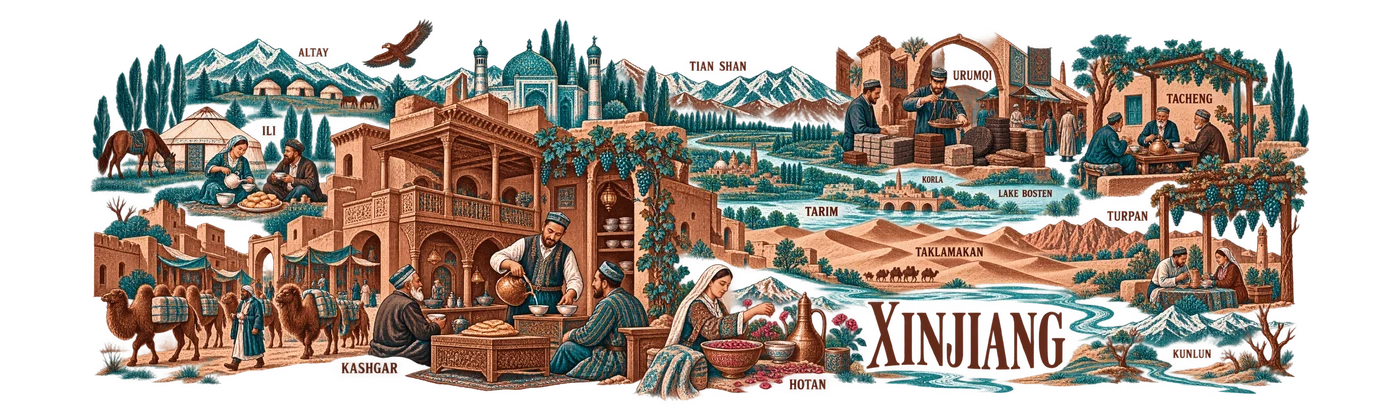
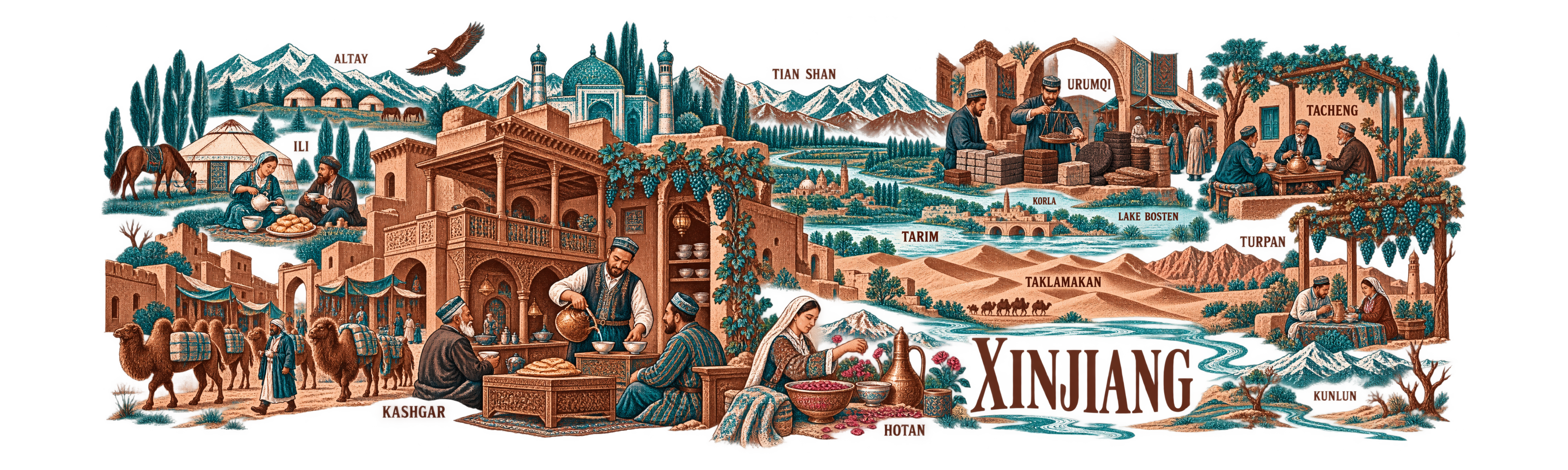
Единая двухцветная гравюра: караванный путь переходит в улицу Кашгара и заканчивается общей чайной сценой.
Проверено для публикации · Командная художественная приёмка актуального R2-пилота
Основание проверки
Явный release-allowlist ровно 18 актуальных R2; совпадающий artwork_path обязателен.
Актуальный верхний раздел фиксирует все 18 для показа; адресные исправления TW_C1 завершены. История прежних дефектов ниже не является статусом текущей версии.
История независимой критики, отказа от разрозненных сцен, контрольных дизайнов и адресных правок.
Допущен только актуальный R2 artwork, прошедший командную художественную проверку; статус пилота сохраняется, не означает пользовательского утверждения тиража.
Палитра авторского задания
#733F33
#187D83
Точное текстовое задание
Текст совпадает с публичным TXT. Перечень надписей и деталей описывает авторское задание; это не OCR и не обещание воспроизводимости без использованных референсов.
SHA-256: 1f1933c1bb0aa1ea501ad93a316cbd8a91fb7f3afc710316d1143011168bb073
Прочитать полный промпт
STEP 1 — original generation

Create an extraordinary original ceramic PRINTING DECAL of the requested region, using the attached approved GUANGDONG design as the compositional and drawing benchmark. This is a new richly connected regional illustration, not a mug mockup. The attached image is the STYLE reference; its Guangdong-specific subjects and lettering must all be replaced by researched content below. There is deliberately no regional map image in the input: the supplied text already contains the factual map inventory. Match the reference's visual richness, collector appeal, confident drawing and sense of a whole place.
THE CRITICAL LESSON: the previous trial failed because it looked like disconnected stickers in two rows. Do NOT make a contact sheet, a tidy row of icons, independent floating islands, equal-sized scenes, evenly spaced caption boxes, or a catalogue. Compose ONE engrossing panorama with three depths, dramatically varied scale and a continuous visual journey. Use a dominant local hero story, a counterweight and many integrated discoveries. Neighbouring scenes may meet, partially overlap, share a ridge, a street or an architectural contour. Smaller stories nest inside the larger world. Tea leaves, architecture, process tools, people and landscape must interact, not hover independently. The result should reward a minute of looking, not be exhausted as a list in two seconds.
TRANSPARENCY AND COMPOSITION: keep genuine alpha-zero exterior and natural interior openings. No rectangular paper/sky/sea/land background, no opaque white backing, no coloured atmospheric wash, no checkerboard. Transparency should feel like carved breathing channels WITHIN the illustration: a river gap, space under a bridge, a temple court, a clear aperture around a word. Only two or three quiet pockets across the panorama, never a blank moat around every item. Do NOT target a transparency percentage. Do not join the drawing with decorative dotted connector lines: link it through actual regional geography, streets, terrain rhythm, roof lines, branches and meaningful human action. Sparse irregular fine strokes may suggest water or roads. No solid province silhouette.
CANVAS: native RGBA PNG, 3840x1280, quality max. Draw a long shallow panorama across x=60..3780 and y=95..1185, using almost the full width. All marks and letters whole, with a modest clear safety margin. The final proportional print is3840x1152 at250x75mm. Do not create a central16:9 picture with huge blank side panels; do not solve spacing by shrinking the entire artwork. All objects remain undistorted. Most shapes should belong to a shared irregular silhouette, with selected disconnected tiny natural accents only.
CRAFT: exceptionally crisp intentional ink, precise silhouette design, beautiful local detail and confident line weight. Detailed does not mean fuzzy crosshatching everywhere. Small captions use dark high-contrast ink, correct English capitals and sufficient clear space to read at real mug scale. No tiny italic map handwriting, nonsense text, Chinese script or decorative fake writing. A clear main regional title appears once; the title is part of the composition, not a separate header with empty space beneath. Preserve the designated colour family, not the exact Guangdong colours of the reference. No borrowed commercial logos, political emblems, invented plantations, tea health promises, unverified dates or superlatives.
REGIONAL TRUTH: distinguish tea cultivation from trade, processing, drinking rituals and herbal infusions. More density must come from deeper local storytelling, not duplicated generic gardens or fabricated tea regions. In non-growing regions show how tea is transported, sold, prepared and shared. The content specification below outranks recognisable Guangdong objects in the attached style reference.

COLLECTION LANGUAGE — TWO-INK ENGRAVED TEA ATLAS. Use the exceptionally detailed navy/copper GD24 as reference, recoloured into this region's two inks. Replace its loose constellation metaphor with a continuous varied field-guide panorama: one magnificent central local tea story, smaller stories tucked into its surroundings, long organic landscape threads and varied title placement. Engraved organic contours, tiny meaningful details, not repeated crosshatched blobs. Strong selective silhouette and beautiful large-to-small scale shifts. No dotted route-node diagram, no two-tier icon grid. The regional title is a tall narrow serif woven into a deliberately reserved pocket; it does not demand symmetric empty flanks.

XINJIANG — TEA ARRIVES; HOSPITALITY MAKES IT LOCAL. This must be recognisably Central Asian Xinjiang, not a southern Chinese tea garden wearing a different label. Tea is imported and consumed here; NO Camellia plantations, southern tea terraces or tea pickers. Desert trade and six distinct forms of serving create the tea story. Draw real everyday hospitality with dignity, no costume caricatures. Felt yurts, Uyghur adobe houses and religious architecture are different building types. Use actual poplars and grape arbors, not tropical palms. Bactrian camels have two humps. Tea-bale caravan imagery is an editorial symbol of exchange, not a surveyed historical route.
Six researched tea-culture episodes must live within the shared world, with unequal importance: KASHGAR: a magnificent two-storey adobe old-city teahouse, carved wooden balcony, open arcade, host pouring from a copper kettle into shallow bowls, naan and a low carved tea table; this is the emotional hero. ILI: Kazakh milk-tea hospitality beside a felt yurt, milk pitcher, kettle, bowls and baursak, one tethered horse and poplars. URUMQI: imported compressed tea commerce inside a bazaar arcade, opened brick showing pressed leaf texture, parcels, balance scale, hands weighing tea, no invented vendor logo or local cultivar. TURPAN: tea and naan under a grape arbor, a sun-warmed earthen wall, one slender local minaret in the distance and Flaming Mountain ridges. HOTAN: a rose/herbal infusion distinct from Camellia tea, metal kettle, scattered rose petals, carved bowls and a silk-fold cue; no medical promises. TACHENG: a quieter courtyard milk-tea conversation, benches and a shared tray. These are places along a thematic tea journey, not six equally sized postcard frames.
Source-map richness to integrate naturally: snowy Altai peaks and three yurts with horses toward the north; Tian Shan's extended mountain barrier through the middle distance; Ili's river/poplar oasis; angular Flaming Mountains by Turpan; the Tarim River along the desert's northern edge with Aksu and Korla; the small Lake Bosten and sparse dry channels recalling Lop Nur toward the east; Taklamakan dune ribbons; Kashgar's old-city roof maze; the turquoise-tiled Apak Hoja dome with four corner towers near Kashgar, never labelled Hotan; Pamir and Kunlun ridges at the southern side; a tiny soaring eagle. Oasis agricultural rows may be hinted but must not look like tea cultivation. Include Altay and Karamay as subtle settlement silhouettes if useful, not gratuitous tiny labels. Preserve the distinct map vocabulary through drawing rather than through a mass of unreadable text.
English typography only. Main name exactly XINJIANG once. Six short tea-place captions KASHGAR, ILI, URUMQI, TURPAN, HOTAN, TACHENG should be easy to find at the correct local episode; never on disconnected rectangles or leader-line diagrams. Optional geography words limited to TIAN SHAN, TARIM, TAKLAMAKAN where the chosen composition offers real legible space. No Chinese, Cyrillic, Arabic script, pseudo-lettering, dates or tourism marketing slogans. A vessel never substitutes for an entire landscape: the world is large, the kettle belongs to people in it. Do not make a giant cup-shaped container for the whole region.

COMPOSITION — THE ROAD ENDS AT A SHARED BOWL. Make a beautiful, surprisingly elaborate two-ink engraved panorama. The great Kashgar teahouse fills approximately the middle-left quarter of the drawing, its carved balcony and arcade large enough to explore. In front, a graceful pouring gesture, a tea tray and two seated conversational figures form the first close focal point. The teahouse's left wall continues into bazaar roofs and an incoming Bactrian caravan, its saddle packs distinctly rectangular. These are genuinely joined by a winding street, NOT separate figurines separated by alpha moats. A courtyard entrance opens behind the host; we see an interior shelf of stacked bowls. A grape branch climbs one timber post and becomes the Turpan arbor farther right through a deliberate change of scale, not a nonsensical physical transplant.
Run the Tian Shan ridgeline behind the roofs as one selectively broken, intricately engraved contour; small yurts and grazing horses sit on a shared high foothill shelf at the far left, while Ili milk-tea service is visible lower down beside poplars. A narrow Tarim river ribbon cuts through transparent openings below the mountains and leads toward warm Taklamakan dunes on the right. The dunes curl naturally behind a modest Hotan infusion worktable, where rose petals, kettle handle and a folded silk edge reward close inspection. Behind it, small Kunlun peaks and an eagle close the rhythm. Tuck the Urumqi tea trader and Tacheng courtyard into two connected architectural recesses; label them locally without giving them their own frame. A small turquoise-ink Apak Hoja dome belongs behind the Kashgar roofscape, recognisably separate from the teahouse. Include a low lake shoreline and dry-channel motif as fine counter-rhythms near Korla.
The main XINJIANG title is a tall elegant engraved serif, substantial and instantly readable, nested in the lower middle-right transparent pocket beneath the ridge and beside the river bend. Let a dune contour tuck under its baseline and a kettle spout point toward the opening between the title and courtyard; do not fence the title off in a blank horizontal strip. All lettering uses the dark adobe ink. Two inks only: adobe #733F33 and mineral teal #187D83, not white fill. Dark adobe carries structure, teal picks out water, tiles, select textile strokes and leaf textures. No pastel watercolor. This should feel as meticulously composed as an exceptional museum copperplate illustration, but warm and alive. Allow broad roofs, major camels and foreground hands to be much larger than distant yurts; microscopic repeated icons are failure. The whole drawing has a single irregular contour and a small number of natural apertures. It must feel richer and more interlocked than a souvenir sticker collection.

FINAL PRIORITIES: one connected world, instant Xinjiang identity, real tea hospitality, extraordinary crisp drawing, true alpha and whole English lettering. The attached Guangdong reference sets the visual craft and richness; do not reproduce its tea gardens or place names.