Guangdong / GD22
Большие буквы — маленькие миры
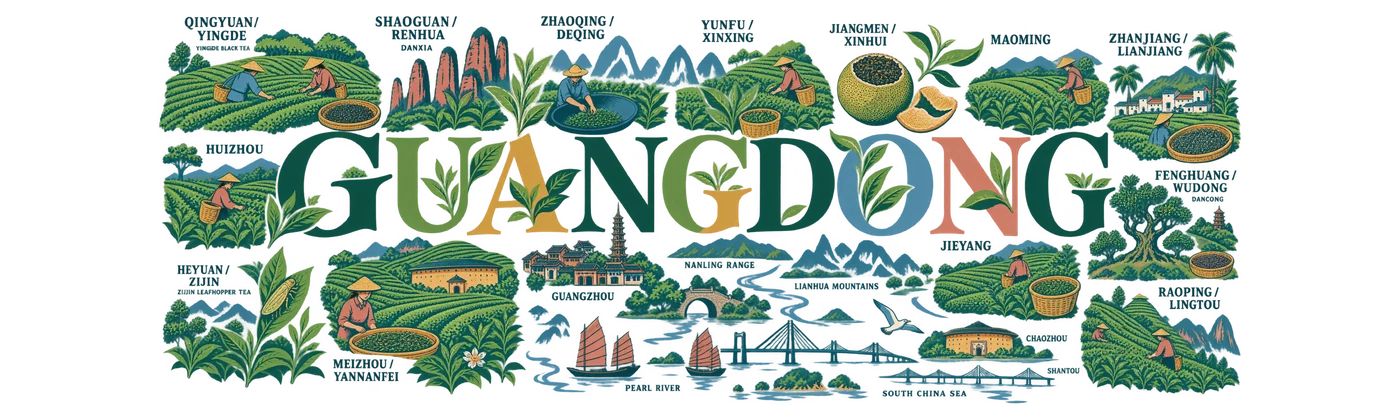
Пять цветов: выразительная типографика и чайные миниатюры с английскими подписями.
Проверено для публикации · Конкретный рисунок выбран пользователем как визуальный эталон
Графический язык
typographic-travel
Режим подписей
english-labels
Принцип расположения
random
Графическое семейство
typographic-travel
Исследовательский охват: чайных макротерриторий в задании
13
Основание проверки
Шесть выбранных пользователем работ Guangdong определяют C1–C6: GD24, GD22, GD18, GD01, GD02, GD03.
reference_origin связывает каждое выбранное направление с конкретным финальным artwork либо masters/final.
master_file/artwork_file канонически связывают выбранный финальный мастер и опубликованный PNG.
Положительная пользовательская оценка относится к указанному конкретному финальному изображению, выбранному эталоном. Это доказательство визуального выбора, а не полный посимвольный QA; пакетная техническая проверка не подменяет это различие.
Палитра авторского задания
#244C47
#789764
#D5AA55
#D27C73
#6F96B0
Точное текстовое задание
Текст совпадает с публичным TXT. Перечень надписей и деталей описывает авторское задание; это не OCR и не обещание воспроизводимости без использованных референсов.
SHA-256: 38c5a89efa8c31d46117ba35028b305a9011d9bef64f6e9b727bb549f265b621
Прочитать полный промпт
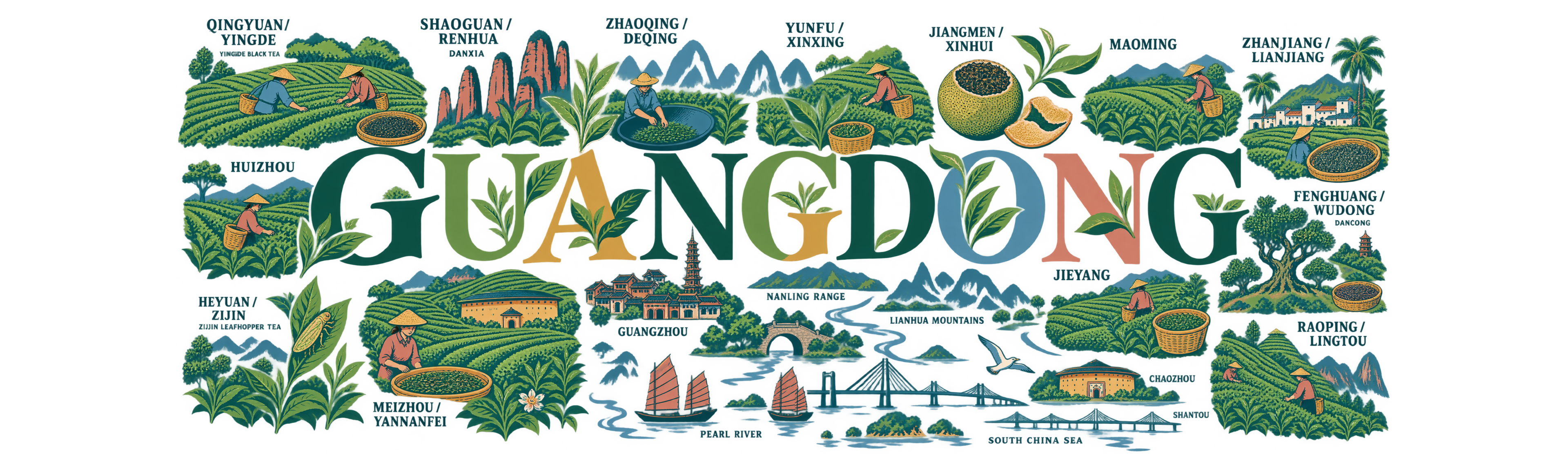
Create an exceptional original FLAT PRINTING DECAL celebrating the TEA GEOGRAPHY OF GUANGDONG. The result is the unwrapped foreground illustration alone, never a photograph of a cup or any mockup. Tea professionals should discover many distinct local tea territories and craft details, not a generic tourist skyline.

ART DIRECTION: Lead with a stunning large original serif GUANGDONG word whose letters occupy almost the whole length of the composition without becoming a solid block. Place the thirteen tea-region stories above, below and through spacious letter counters in deliberately scrambled order. A tea sprig may gently echo one letter terminal, but every letter stays immediately readable. The scenes retain distinct silhouettes and small English names in the surrounding clear spaces. Draw tea terraces, ancient trees, harvesters, drying baskets and citrus motifs as small joyful flat illustrations with elegant dark outlines. Five muted jewel inks. The letters themselves use alternate inks sparingly. No copied font artwork, brand logo, continuous border, wallpaper backing or dense typographic clutter.

PALETTE: use exactly 5 deliberate opaque printing-ink colours: #244C47, #789764, #D5AA55, #D27C73, #6F96B0. Transparent negative space is not a colour. Do not introduce black, white, cream, extra pastel shades, gradients or coloured shadows outside this palette. Antialias only the edges. Empty sky, land, water, wall interiors and spaces between objects stay alpha-zero. Use bounded flat accents on individual objects, never a continuous ground, paper texture, backdrop, haze or filled sea. Keep substantial open space within and between scenes.

TEA IS THE SUBJECT: devote roughly 75 percent of visual attention to tea growing, tea leaves, harvesting and tea craft. Include THIRTEEN DISTINCT TEA-TERRITORY SCENES, not just two large tea gardens. These are an illustrated overview of documented regions, not claims of exact farm architecture:
1 Qingyuan / Yingde: neatly curving tea rows, two broad-hatted pluckers, baskets and a small tray of dark processed tea leaves; also a small upland garden, acknowledging Qingyuan's broader tea landscape.
2 Shaoguan / Renhua: northern slopes beside Danxia rock columns and a close-up pale-haired tea bud drawn with open fine lines. Hairy buds are plant morphology; do not label this as exclusively white tea.
3 Zhaoqing / Deqing: tea gardens near a few karst-hill contours and a person working leaves in a shallow iron pan.
4 Yunfu / Xinxing: a clearly separate western hilly tea garden with a leaf sprig and a small harvesting basket.
5 Jiangmen / Xinhui: citrus-peel tea craft, a small opened dried citrus shell containing tea and a curled peel beside it. This is a processing/culture node, not a claim that all tea leaves inside it grow in Xinhui.
6 Maoming: a distinct warm-climate hill garden with a worker holding a tea basket.
7 Zhanjiang / Lianjiang: southern tea rows beside the original southwest village and palms, with rolled tea-leaf shapes in a small sorting tray.
8 Huizhou: another distinct gently rolling tea-growing hill scene with broad leaf sprigs and a small tea worker.
9 Heyuan / Zijin: tea shoots and ONE tiny recognizable leafhopper insect beside a larger serrated tea leaf, not a giant cicada; a small mountain garden behind these outlined objects.
10 Meizhou / Yannanfei: a broad terraced tea fan and Hakka architectural context, a worker with a basket and a round tea-processing tray.
11 Jieyang: a separate eastern upland tea garden with tall alternating tea bushes and a leaf-sorting basket, spatially distinct from both Meizhou and Chaozhou.
12 Fenghuang / Wudong: the strongest ancient SINGLE-TRUNK tea-tree silhouettes, mountain gardens, a tiny pagoda and one charcoal-roasting basket. Include several little separate tea-tree groves to suggest the Tianchi, Dangui, Baihuashan, Tianhaodong and Wudong Yuntiandong places on the user's tea route. Do not print unverified tree ages, heights or tasting claims.
13 Raoping / Lingtou: a clearly separate steep tea-growing slope east of Fenghuang, with small harvesting figures and three little garden groups suggesting the route's Zhentoudong, Yongcheng and Dakeli stops. Raoping must not be absorbed into a generic Phoenix label.

RETAIN THE SOURCE-MAP STORY as smaller, recognizable supporting drawings: Nanling ridges; Lianhua ridges; upright Danxia rock columns; Guangzhou traditional dark-roof buildings plus a separate pagoda; the small inland stone arch bridge; the unnamed round walled courtyard in the east; a short pack-horse/mule caravan with handlers; the southwestern white-wall village and palms; exactly TWO Chinese sailing junks; one flying seabird; THREE different coastal bridges; sparse branching rivers, coastline fragments and islands. Many of these can be integrated into the thirteen tea scenes. They must not overwhelm the tea geography. Keep the two original harvest scenes with two workers each. Do not import foreign monuments, foods unrelated to the documented tea craft, commercial logos or fictional mascots.

FREE COLLAGE, NOT A MAP: deliberately scramble the geographic order of all thirteen tea scenes. Regions keep their own characteristic visual details and their correct English captions. Do not place them at their geographic coordinates or reproduce the original map outline. Use the specific unusual composition in the art direction. Tea trees, small gardens, processing baskets, architecture and boats should alternate at surprising scales while staying recognizable. No background or generic decoration that takes the place of a documented tea area.

ENGLISH ONLY. The main title is exactly GUANGDONG. All other wording uses Latin-script English place names, never Chinese characters, Cyrillic, pinyin tone marks or pseudo-writing. The mandatory tea captions are: QINGYUAN / YINGDE; SHAOGUAN / RENHUA; ZHAOQING / DEQING; YUNFU / XINXING; JIANGMEN / XINHUI; MAOMING; ZHANJIANG / LIANJIANG; HUIZHOU; HEYUAN / ZIJIN; MEIZHOU / YANNANFEI; JIEYANG; FENGHUANG / WUDONG; RAOPING / LINGTOU. Use two lines for long paired labels. Short secondary captions, only if there is clean space: DANCONG; YINGDE BLACK TEA; ZIJIN LEAFHOPPER TEA; NANLING RANGE; LIANHUA MOUNTAINS; DANXIA; GUANGZHOU; CHAOZHOU; SHANTOU; PEARL RIVER; SOUTH CHINA SEA. Prefer readable tea-cluster names over tiny non-tea town lists. No invented slogans, dates, awards or serial numbers.

OUTPUT: native RGBA PNG, transparent background. Create an exceptionally WIDE 10:3 design for 250 x 75 mm. On the 3840 x 2160 carrier place ALL marks inside a single central strip x=55..3785, y=520..1640. Spread the illustration across the full strip width. Keep the unused upper and lower canvas completely transparent. Every object and letter is whole and uncut inside the strip. No mockup, no base surface, no rectangle behind the drawing, no photographed paper, no white backing, no rendered transparency checkerboard. Crisp ink belongs to the drawing; all negative space is genuine alpha transparency.