Guangdong / GD03
Реки и порты
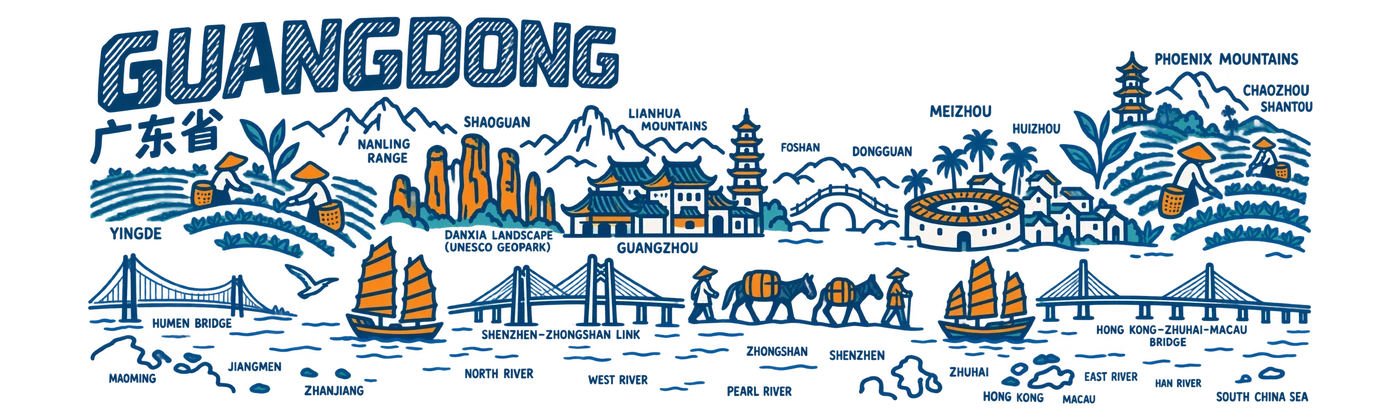
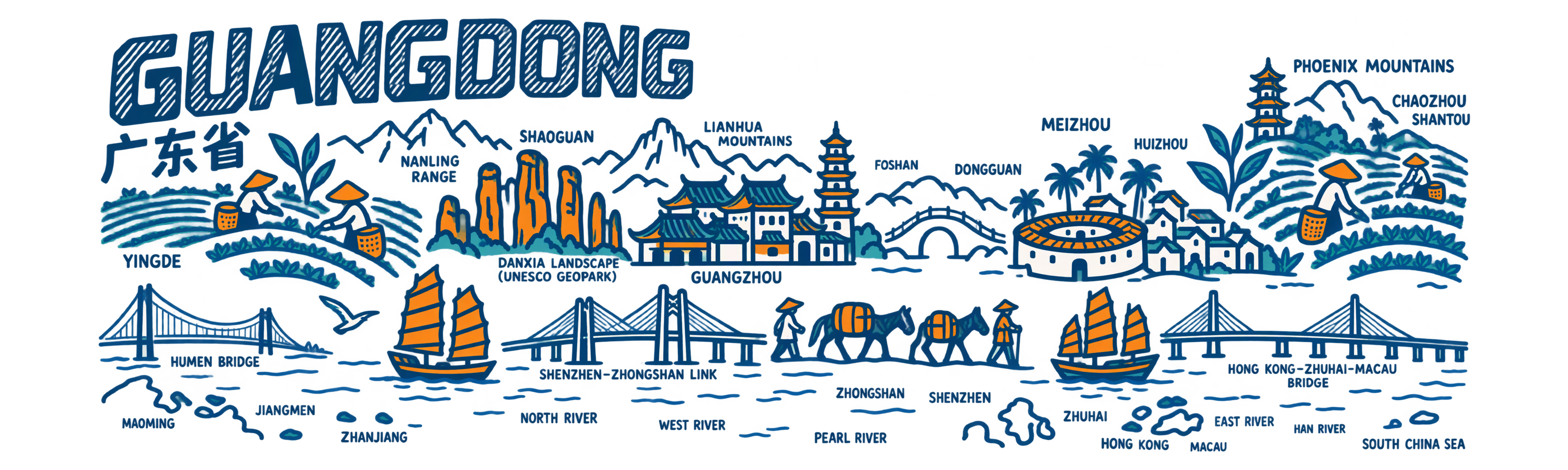
Динамичная сине-оранжевая графика: реки связывают чайные горы с дельтой, мостами и морскими джонками.
Проверено для публикации · Конкретный рисунок выбран пользователем как визуальный эталон
Основание проверки
Шесть выбранных пользователем работ Guangdong определяют C1–C6: GD24, GD22, GD18, GD01, GD02, GD03.
reference_origin связывает каждое выбранное направление с конкретным финальным artwork либо masters/final.
master_file/artwork_file канонически связывают выбранный финальный мастер и опубликованный PNG.
Положительная пользовательская оценка относится к указанному конкретному финальному изображению, выбранному эталоном. Это доказательство визуального выбора, а не полный посимвольный QA; пакетная техническая проверка не подменяет это различие.
Палитра авторского задания
#154E70
#277EBD
#8DCBD0
#E69535
Точное текстовое задание
Текст совпадает с публичным TXT. Перечень надписей и деталей описывает авторское задание; это не OCR и не обещание воспроизводимости без использованных референсов.
SHA-256: bc33033cb722b165ab456c78d90d3fc499485970d05e3f700f47d42317cda9fc
Прочитать полный промпт
Create a NEW FLAT PRINTING DECAL for GUANGDONG province. Use the attached mug photograph ONLY to learn its drawing language: relaxed hand-drawn contours of nearly uniform thickness, simple friendly silhouettes, a few flat spot-colour accents, compact separated local scenes and confident lettering. Match that graphic simplicity. The output is just the unwrapped drawing, never a mug, photograph, ceramic surface, lighting or mockup. Do not copy the photo's food, landmarks or commercial logos.

Think of THREE OPAQUE PRINTING INKS drawn on an EMPTY ALPHA CHANNEL. The untouched substrate is TRANSPARENT, including all sky, surrounding space, water, roads, wall interiors and openings. Most enclosed areas remain unprinted. Colour only chosen leaves, roofs, sails, rocks and clothing with flat accents. The detail comes from varied silhouettes and storytelling, NOT shading or realism. Use round clear pen strokes, approximately 7–10 pixels wide, and a few short decorative dashes. No crosshatching, engraving, mist, glow, gradient, paper, white backing, coloured ground, sea fill or landscape backdrop. At least half of the composition remains clear.

Make a lively collage of separate little scenes in TWO shallow staggered rows. Large GUANGDONG and smaller 广东省 are the typographic anchor. Draw all of these source-map subjects: two tea-growing scenes, YINGDE and the PHOENIX MOUNTAINS near CHAOZHOU, each with curved terraces, TWO small broad-hatted harvesters and baskets, plus one tea-leaf sprig; a pagoda in the Phoenix scene; NANLING and LIANHUA mountain outlines; upright DANXIA rock columns; Guangzhou traditional dark-roof buildings and a separate pagoda; one small stone arch bridge; one round thick-walled courtyard dwelling seen from above; a pack-horse/mule caravan with handlers; a white-wall southern village and palms; exactly TWO Chinese sailing junks with segmented sails; one flying seabird; THREE separate slender bridges, Humen, Shenzhen–Zhongshan, Hong Kong–Zhuhai–Macau; a few island contours, coastline fragments and branching river strokes. Each subject is simplified as on the photographed cup. All three bridges must look different. Water is ONLY a few lines with clear spaces between them. This is a collection of memories, not a geographic map or continuous landscape. Do not invent skyscrapers, unrelated monuments, foods, tea ware or tea varieties.

Place the following readable small capital captions throughout the open gaps, once each. Names without a depicted landmark can stand alone; do not invent buildings to accompany those names. City names: YINGDE, SHAOGUAN, MEIZHOU, CHAOZHOU, SHANTOU, GUANGZHOU, FOSHAN, DONGGUAN, HUIZHOU, JIANGMEN, ZHONGSHAN, SHENZHEN, ZHUHAI, HONG KONG, MACAU, MAOMING, ZHANJIANG. Scene captions: NANLING RANGE, LIANHUA MOUNTAINS, PHOENIX MOUNTAINS, DANXIA LANDSCAPE, (UNESCO GEOPARK), NORTH RIVER, WEST RIVER, EAST RIVER, HAN RIVER, PEARL RIVER, SOUTH CHINA SEA, HUMEN BRIDGE, SHENZHEN–ZHONGSHAN LINK, HONG KONG–ZHUHAI–MACAU BRIDGE. Arrange text beside relevant scenes, never over linework. Allow the longest labels to wrap onto two lines. Keep the two tea scenes large and identifiable.

STYLE — RIVERS AND PORTS. Use the energetic angular pen drawing and strong lettering of the Hong Kong photograph. Palette: deep navy #154E70, clear blue #277EBD and warm orange #E69535. Create large confident slanted GUANGDONG block letters in an open upper-left pocket; decorate only a few letter faces with wide spaced diagonal lines. The picture moves in a playful shallow zigzag from Yingde tea hills on the left through Danxia columns and Guangzhou roofs to the Phoenix tea scene on the right. Below, three long bridges alternate with two large orange-sailed junks, caravan and palm village. Link the rhythm with short isolated navy river strokes, not a ribbon or continuous blue area. Tiny blue leaf accents and orange harvester hats repeat across the strip. Draw clean angular outlines with many open interiors and a lively sense of movement.

FORMAT: a single ultra-wide 10:3 composition for 250 × 75 mm. Native RGBA PNG. On the 3840 × 2160 carrier, drawing occupies one horizontal strip approximately x=60..3780, y=520..1640. Spread scenes across the entire strip width with very little empty space at the left and right ends. Everything above and below the strip is fully transparent. No decorative framing rectangle. Every letter and object remains completely inside the strip. Crisp opaque ink on genuine alpha, nothing beneath the drawing.